York's Energy Coach Program
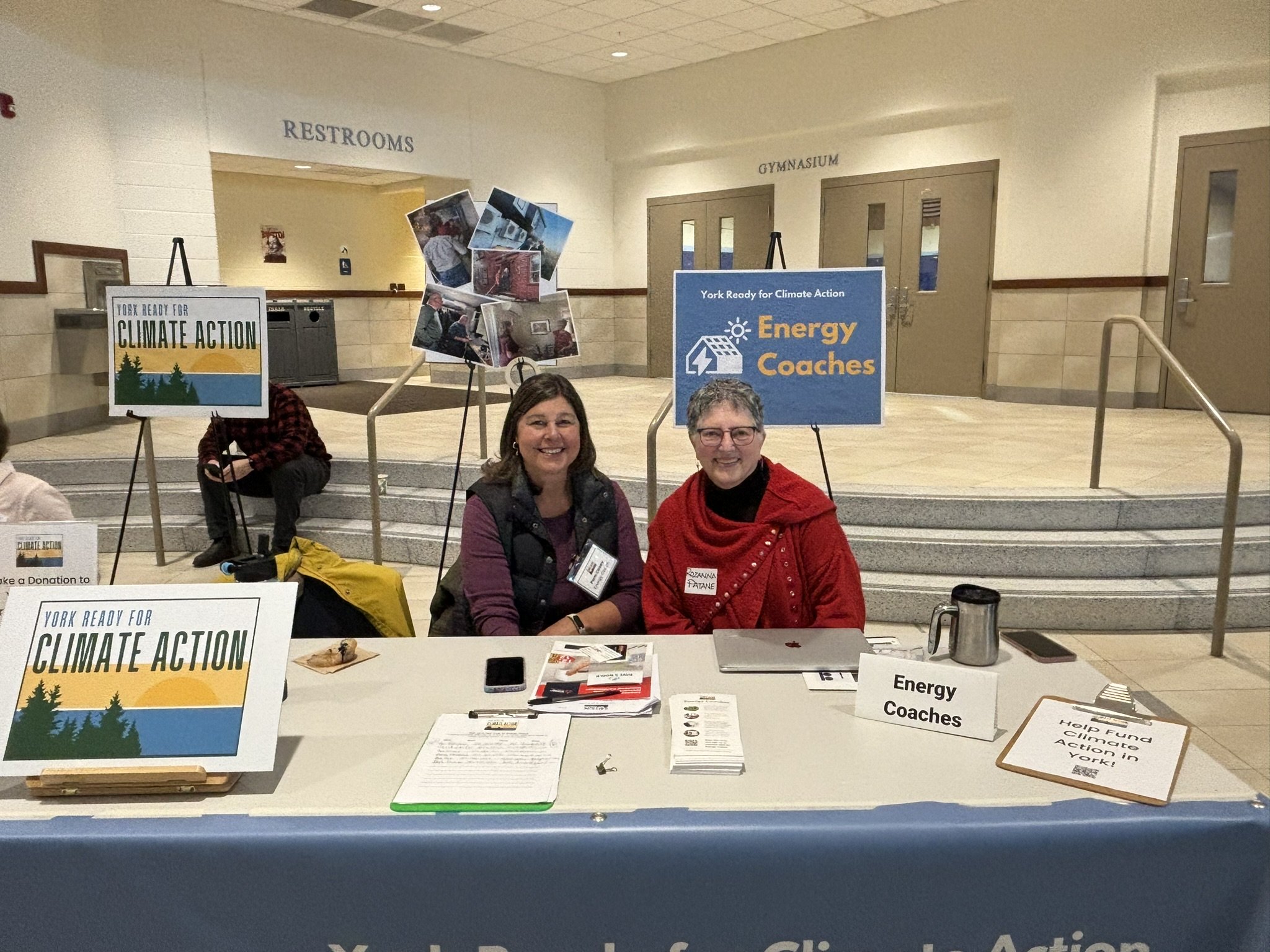
Energy coach Rozanna Patane and Program Director Pam Casey staffing the York Energy Coaches information table at the 2025 York Climate Fair. COURTESY PHOTO
By Justin R. Wolf
Guiding homeowners to be better (energy) consumers
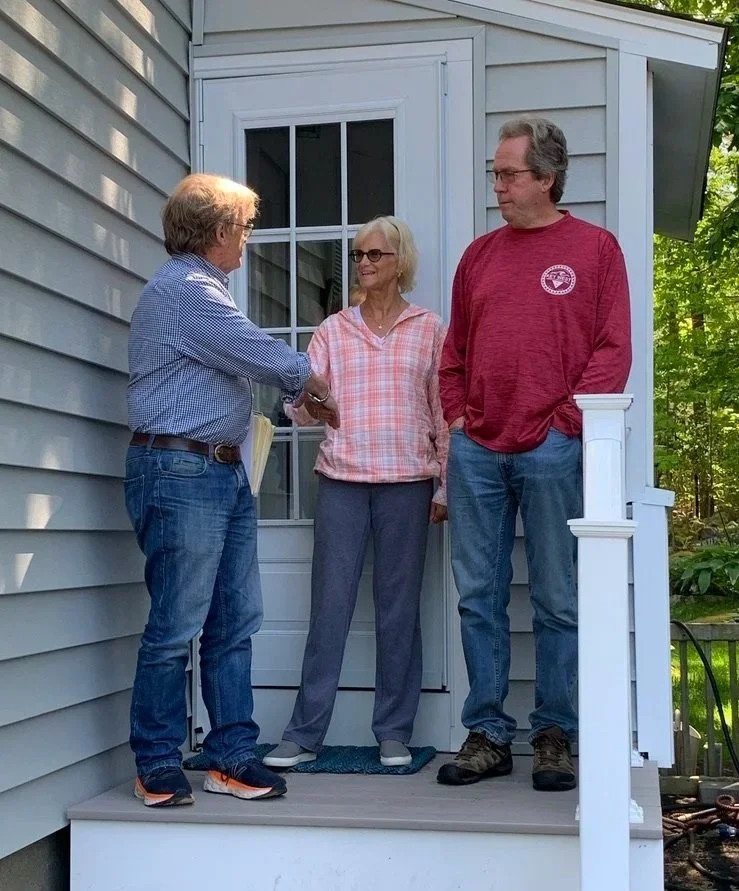
Energy coach Mac McAbee meets with homeowners in York following their energy coaching visit. COURTESY PHOTO
When the town of York released its climate action plan (CAP) in 2022, it joined a growing group of Maine cities to complete this feat. Portland and South Portland were the first, releasing a joint municipal CAP two years prior. The crux of York’s plan is to address the holistic impacts of sea level rise and warming temperatures, while increasing the resiliency of its coastline, forest ecology and town infrastructure. Tall orders, indeed.
Partially in line with Maine Climate Council’s “Maine Won’t Wait” four-year plan, first released in 2020 (version 2.0 of the statewide CAP came out last year), York committed to a 50% reduction in greenhouse gas emissions from 2010 levels by 2030 and a 100% reduction by 2050. The end game is a clean energy economy. The big question is: How can all this be achieved?
“One big goal in the plan is to cut emissions from buildings, because they represent about 74% of the town’s total emissions,” says Rozanna Patane, a board member on the nonprofit York Ready for Climate Action (YRCA). “That led us to have a strategy session to ask some big questions, and from that session came our Energy Coach Program.”
York’s Energy Coach Program makes a sizable impact with a deceptively simple idea: engaging community volunteers to coach neighbors through making their homes more energy efficient and comfortable.
“We are volunteers, neighbors helping neighbors,” reads YRCA’s webpage for the program. Since the program began in 2023 with funding from small donations and a $50,000 state grant, eight volunteer coaches have helped nearly 150 York households to change their energy profile. This can take the form of new heat pumps, weatherization, windows, solar, battery storage and other upgrades and retrofits designed to reduce energy use. There are no commissions involved and neither products nor vendors are pushed on homeowners. The goal, Patane says, is to offer free, objective advice.
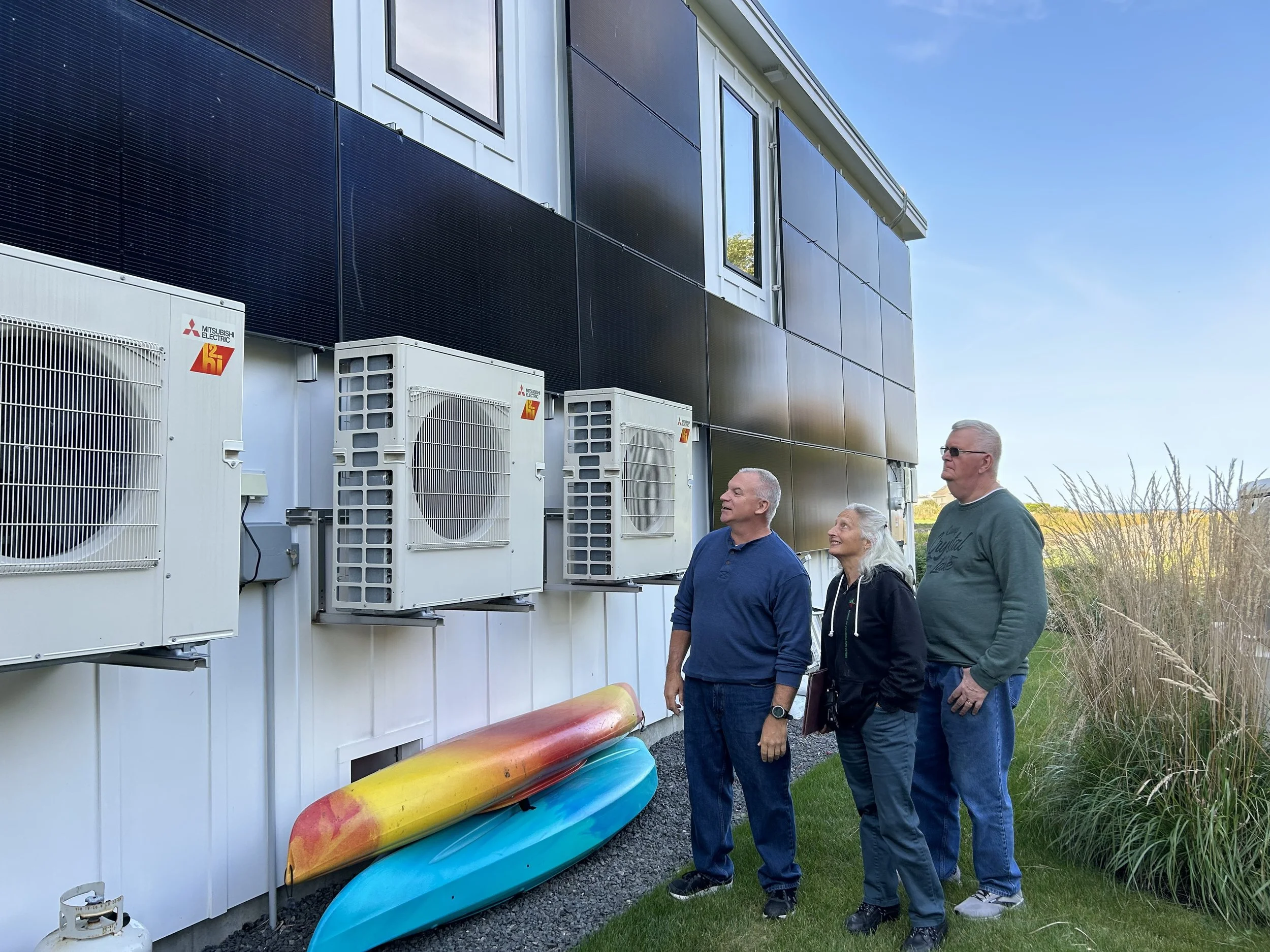
Energy coaches Rob Grogan, Julia O'Connell and Del Coonce examine the heat pump condensers on Rob's house. COURTESY PHOTO
Energy coach Mac McAbee, who also chairs YRCA’s board, has been making house calls from the start, usually in tandem with another coach. This is important work, he says, because “the average homeowners aren’t experts on their own systems.” And in many instances, there are opportunities for energy efficiency and improving occupants’ health and financial well-being. York energy coaches are trained to guide people toward those outcomes.
Challenges abound, including struggles with reaching low-income households or overwhelming homeowners with consultations on multiple projects at once. But incremental change is critical, particularly if private homes are to have any measurable impact on York’s climate action benchmarks.
Now approaching its third year, the Energy Coach Program is proving to have sticking power. New grant funding streams are continually being pursued, and community organizing efforts are attracting collaborations with other community groups and state organizations, including passivhausMAINE, Efficiency Maine, the Governor’s Energy Office and Southern Maine Planning and Development Commission, among others. The Energy Coach Program has also inspired Brooklin’s Neighbor-to-Neighbor Energy Coach Program and the College of the Atlantic’s Maine Energy Upgrade Program. A joint Energy Coach Program from Camden and Rockport is set to launch soon, and the University of Maine has plans to convene a statewide energy coach network.
While such efforts will undoubtedly be key to achieving the state’s broader climate goals, Patane frames the work on a more local scale. “This is a collaboration among a lot of people,” Patane says, citing everyone from coaches and YRCA board members to elected officials. “We have been on a steep learning curve ever since we started the program. We’re constantly learning.”

This article appeared in the Fall 2025 edition of Green & Healthy Maine HOMES. Subscribe today!
Find Maine experts that specialize in healthy, efficient homes in the Green Homes Business Directory.