
Toxin-free, heat-treated wood cladding
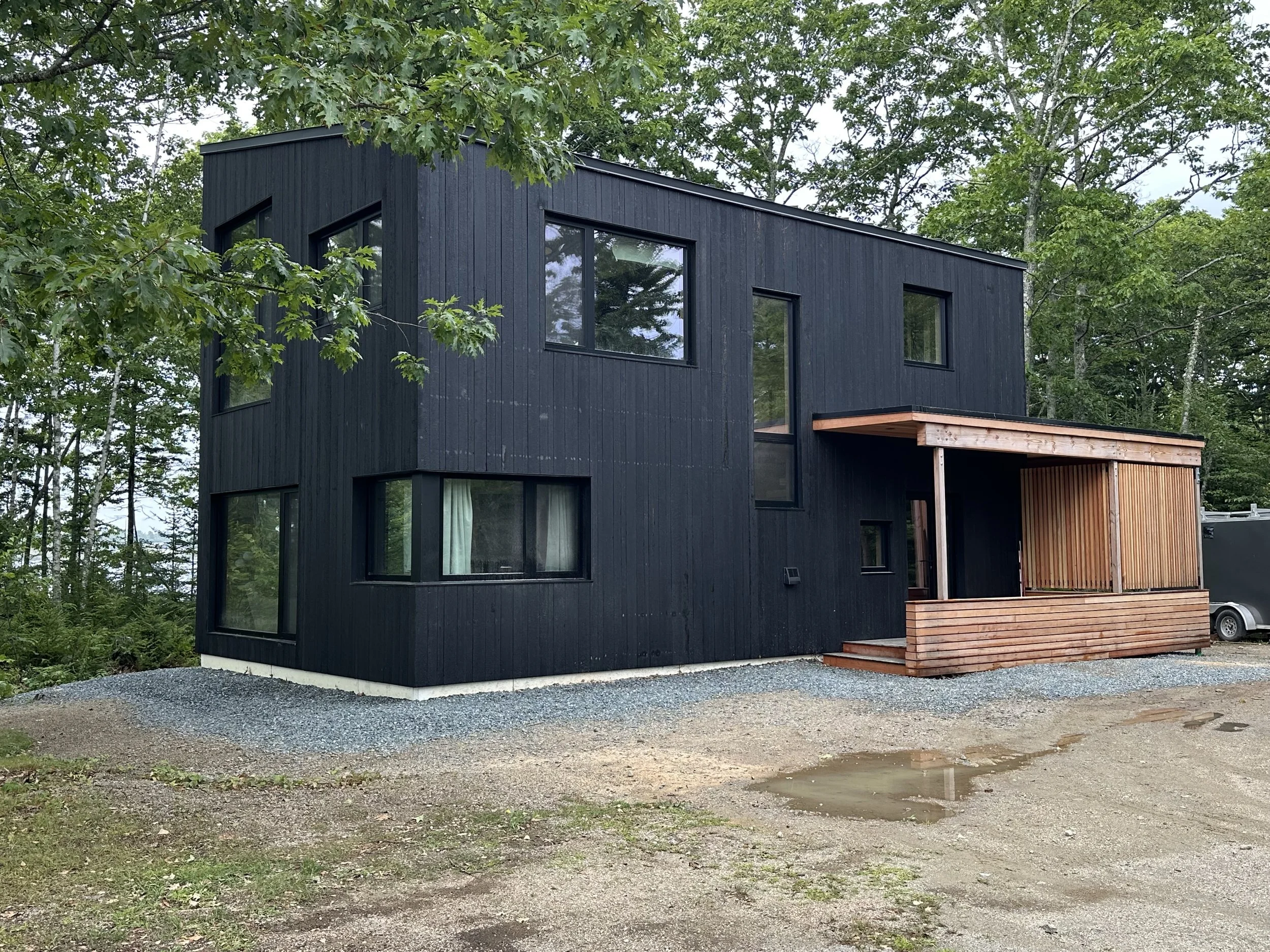
Cinder Wood Products supplied the striking, traditional yakisugi siding for this modern coastal cottage in Hancock County designed by BRIBURN. PHOTO COURTESY OF BRIBURN
By June Donenfeld
Wood is the go-to material for legions of home exteriors, and no wonder: timeless and warm in aesthetic, versatile in design possibilities, and sustainable as a resource, it’s a natural choice when it comes to cladding. To protect against the ravages of rot and insects, wood destined for exterior use has long been treated with toxic preservatives. But there are two tried-and-true ways to treat wood that produce chemical-free, beautiful, durable lumber: yakisugi and thermal modification.
YAKISUGI
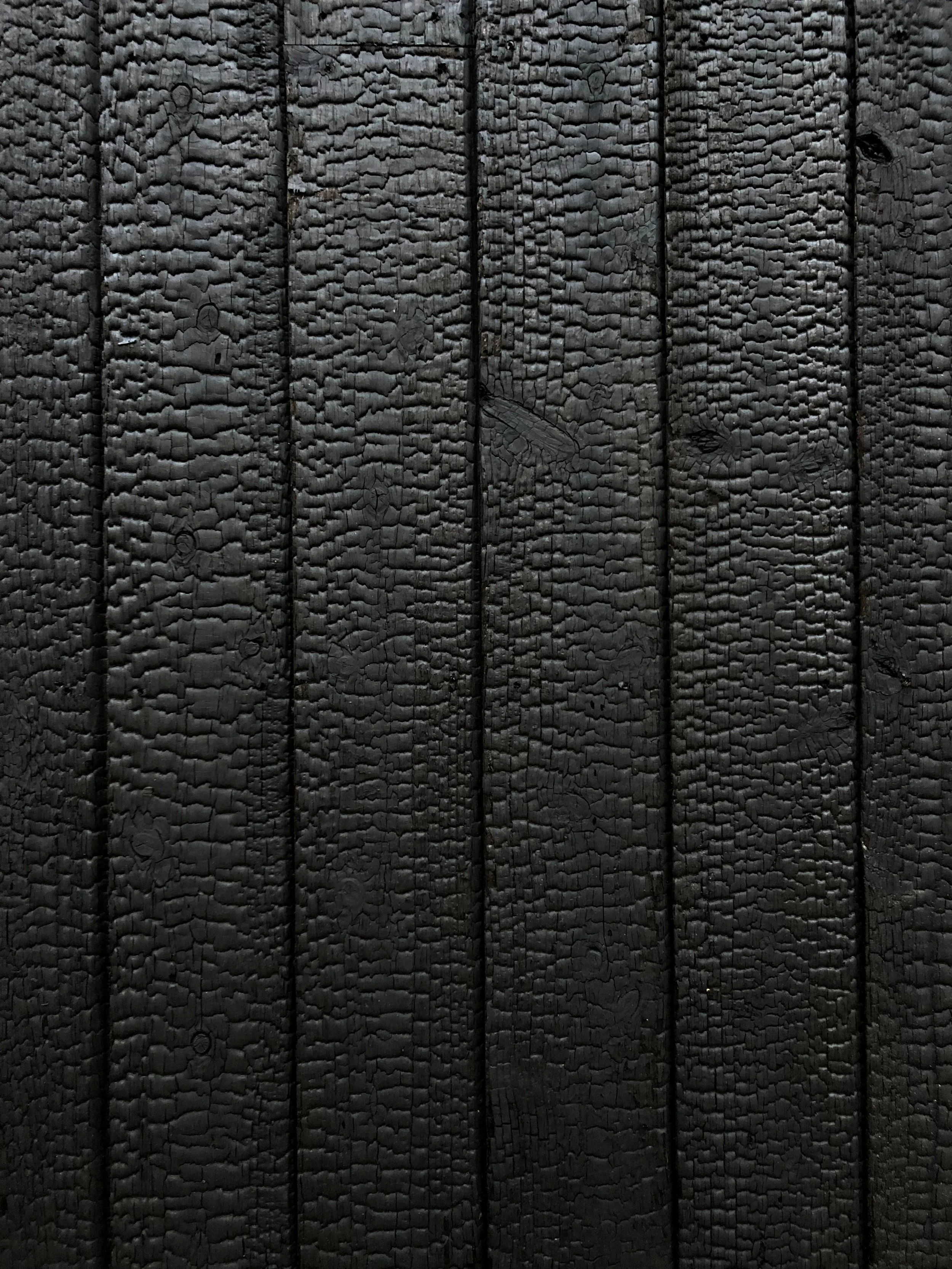
Viewed close up, the richly textured charred wood has a velvety, sculptural look, lending depth and dimensionality to surface. PHOTO: DARA NORVLAAN
Yakisugi (aka shousugiban*] has its origins in 18th-century Japan, where builders developed this practical technique for charring the surface of wood to preserve it. Yaki means to burn, grill or char, while sugi refers to cryptomeria Japonica, a strong, straight-grained evergreen that’s a member of the cypress family, despite its common English name of Japanese cedar. Outside Japan, though, the meaning of yakisugi has been extended to refer to the wood-charring technique in general and can include other tree varieties, such as cypress or western hemlock.
The traditional yakisugi process is simple. Three or four boards are bound tightly together to form a sort of triangular or square chimney and set upright. Fire is lit at the base and moves swiftly up inside, where it is allowed to char the wood for several minutes before the flames are quenched with water. This leaves a 3- to 4-millimeter carbonized layer, a protective shield and a rich, leathery texture that highlights the natural grain.
While dedicated DIYers can still use this method, commercially produced, modern yakisugi is now widely available from manufacturers whose skilled workers use quality-controlled materials, specialized equipment, and finishing techniques to make products consistent in both looks and performance.
When you remove all the moisture from the plank’s surface and create a layer of charcoal, it helps protect the material from fire, insects and rot. It may sound counterintuitive to burn something to make it fire-resistant, but consider how much easier it is to start a campfire using dry kindling rather than wood that’s already been thoroughly blackened by flames. Will yakisugi be 100% fireproof? No, but the dense carbon layer will act as an insulator, delaying combustion and protecting the inner wood. The charring also converts the wood’s outer cellulose into a hydrophobic barrier by removing the organic compounds that make it a veritable all-you-can-eat buffet for insects, fungi and bacteria.
A 2021 USDA Forest Service study on the flammability and fungal rot resistance of yakisugi products from one U.S. manufacturer found that in some cases there was little if any difference between their yakisugi samples and non-charred wood. But the researchers ultimately found the data to be inconclusive.
Jesse Paquin, founder and owner of Maine’s only yakisugi manufacturer, Cinder Wood Products, a design-driven boutique business in Hancock, feels these findings might lead to some erroneous conclusions about yakisugi, which—like all wood siding—needs to be installed correctly to ensure its durability.
“Those samples were tested out of context,” he says, and “did not discuss developments in building technology where a rainscreen system must be used to allow the wood to breathe on all sides, an advancement that has been critical to the performance of our products.” And there’s another vital factor in the proper installation of yakisugi: As different types of wood all have their own characteristics in terms of grain and dimensional stability, “installing [the planks] correctly, using the correct nailing pattern, is key with any of them.”
Cinder Wood has an extensive variety of offerings, which they have supplied to happy customers from Maine to Texas. “Because I think of yakisugi as art, I like to have a palette where we can achieve a wide range of textures and finishes which are tailored to each project,” Paquin says. One big advantage of staying small is that they can control every aspect of production, using both custom machinery and hand processing, “from the length and intensity of charring to the brushing cycles to the refinement of texture and finish.”
*Outside Japan, yakisugi is commonly—and erroneously—called “shou sugi ban,” the result of a long-ago mistaken transcription of the characters; this term does not exist in Japanese.
THERMALLY MODIFIED WOOD
Thermally modified wood undergoes a completely different process. This technique—used in Europe for decades but only relatively recently in the United States—has several stages. Planks are briefly air-dried, then kiln-dried, then placed in a vacuum chamber where the oxygen is removed and steam added, which prevents the wood from igniting or cracking at high temperatures. The temperature is raised to between 300°F and 460°F, at least double that in a conventional wood kiln. The treatment can last anywhere from one to four days.
Similar to yakisugi, the heat alters the wood’s cellular structure, making it more stable and durable by reducing its moisture content and ridding it of the organic compounds that can make it prone to rot and insect infestation. The result is a hardwood that needs neither maintenance nor coating. Also like yakisugi, thermally modified planks need to be installed with great care to ensure longevity. Harry Hepburn, principal at BRIBURN architectural firm in Portland, has had long and successful experience with this material, but warns that due to temperature changes, the boards “can buckle and crack if enough space is not left between them, so you must follow the manufacturer’s instructions for proper installation and longterm durability.”
FIELDWORK: How have these two types of wood fared in the real world? We asked some Maine homeowners and architect Harry Hepburn.
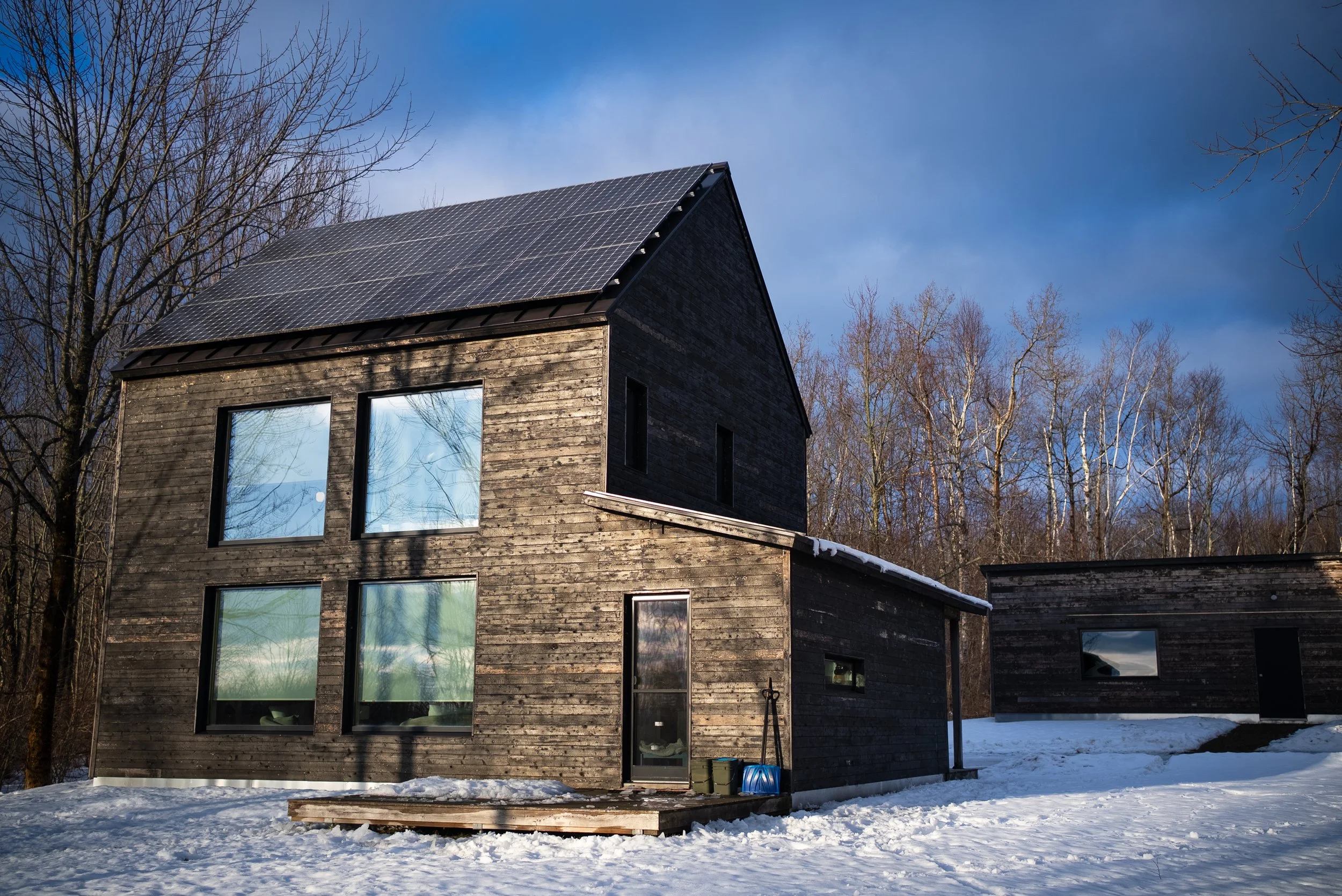
More than ten years after the yakisugi cladding was installed on his previous home in Lincolnville, Josh Gerristsen still loves the beautiful contrast it makes against the snowy landscape. PHOTO: JOSH GERRITSEN
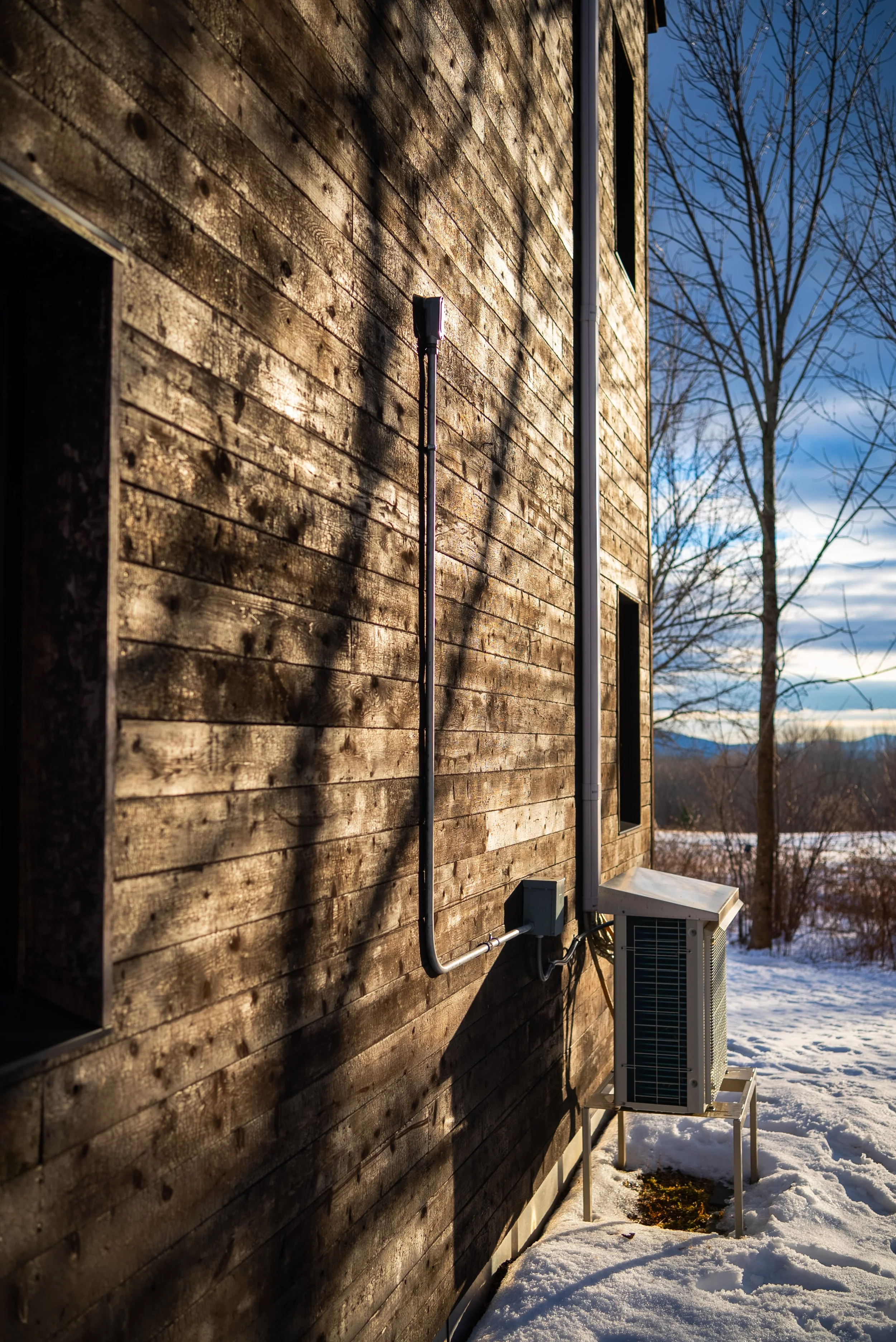
Once Gerritsen discovered how stunning traditional yakisugi boards were, they became his material of choice for his new home—and he'd make the same choice today. PHOTO: JOSH GERRITSEN
Passive House in Lincolnville
Filmmaker Josh Gerritsen chose yakisugi to clad the Passive House in Lincolnville built for him in 2016 by Belfast firm GO Logic. From the start, Gerritsen knew he wanted a beautiful, eco-friendly material that wouldn’t require the maintenance regular wood typically requires. “I didn’t like the idea of scraping paint every five years and then repainting,” he says. “I wanted the house as maintenance-free as possible.”
He nixed the first two candidates: Corten rusted metal siding for aesthetic reasons and fiber cement for its embodied carbon. But once he discovered yakisugi, his search was over—he was smitten. This was two years before Cinder Wood opened for business, though, and while Gerritsen considered buying pre-charred siding from a commercial manufacturer in Texas, to keep costs down, he ultimately decided to have unfinished planks charred onsite by the builders, using propane blowtorches. He left the wood unbrushed—a common modern yakisugi procedure that removes a thin top layer of char—and treated it with a plant-based oil.
Though Gerritsen now lives in Rockport with his young family and rents out the Lincolnville house, he regularly checks on it and says the cladding has held up remarkably well over the decade since its installation. “After a year or two, GO Logic came out and did small touchups with paint where they’d installed nails,” he says, explaining that this was purely for aesthetic reasons—the integrity of the boards remains intact.
Would Gerritsen opt for onsite charring if he had to do it all over again? “I love the aesthetic of what was done on our house, but I think I would have spent the money to buy the pre-burned wood,” he concludes. His advice: Buy samples if you want to have the yakisugi produced professionally, but if you want to tackle a labor-intensive DIY project yourself (as he did with his garage cladding), “char some samples of the wood you are considering, then leave them outside to see how they perform.”
More than a decade on, Gerritsen still loves the look of that Lincolnville house. “Don’t be swayed by friends and family who are encouraging you not to use yakisugi,” he says. “A black house on a winter day? Nothing is more beautiful than that.”
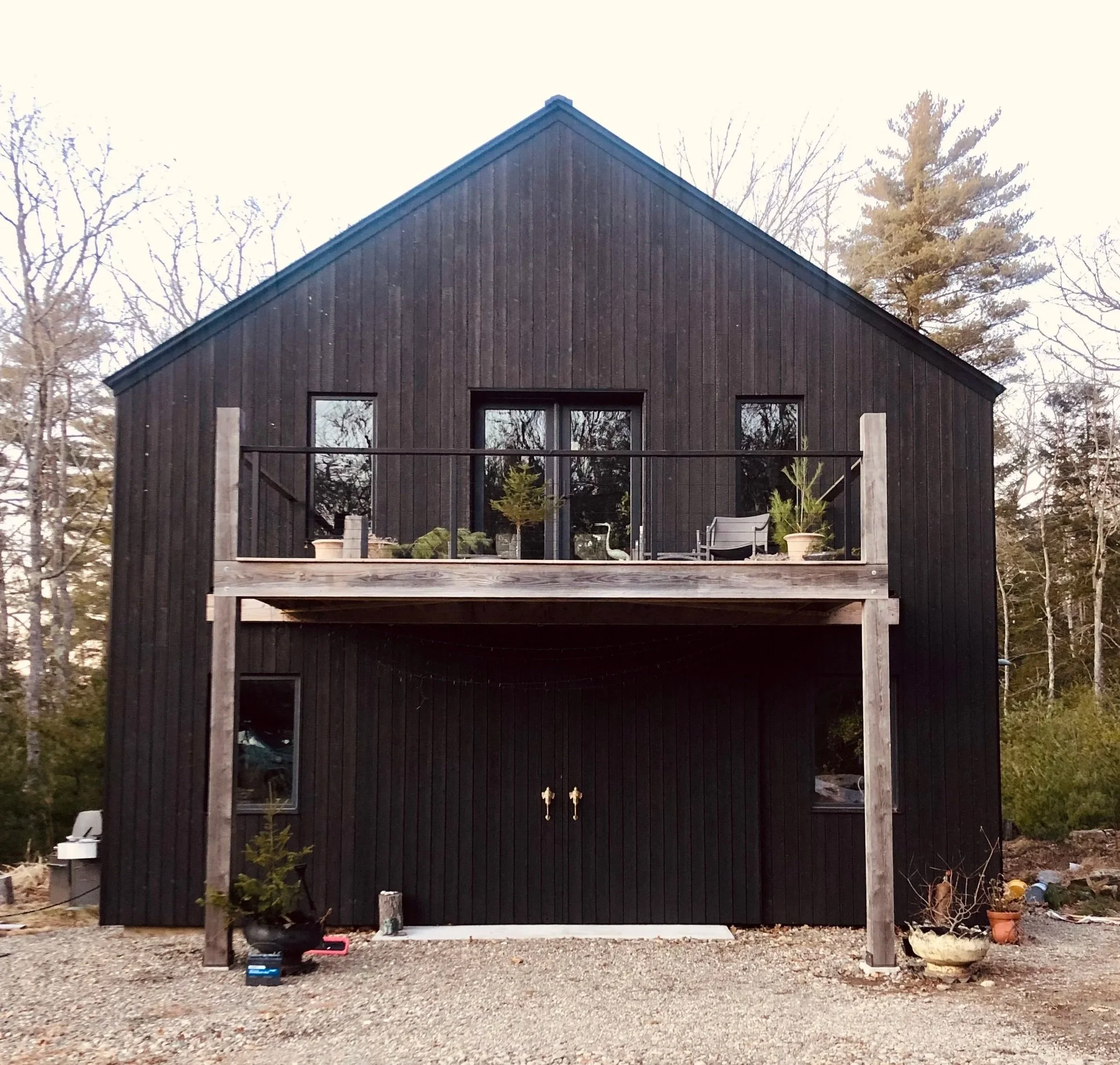
Installed by owner Dara Norvlaan—with help from friends—the traditional, black yakisugi cladding on this two-story dwelling is at once rustic and elegant. PHOTO: DARA NORVLAAN
Dramatic Midcoast Modern Barn
Interior and clothing designer Daria Norvlaan, spent countless hours researching her options for cladding her Lincoln County barn-style house in the most traditional form of yakisugi, drawn to its highly textured, jet-black, velvety appearance, also known as “char-on.” She ultimately settled on the dramatic Suyaki. Japanese cedar from Nakamato Forestry because of their decadeslong experience and the aesthetic appeal of the material. “They rose to the top for me because of the look of their yakisugi and their inherent familiarity with the process,” she says. But unlike planks that are brushed post-charring, a common modern finishing technique, their surface is quite fragile, she cautions, and “when you install them, you need to handle them carefully, or you’ll crush the char and it will come off as little flakes and soot.” Since finishing the installation in 2024, she has touched up some areas with black tung oil but hasn’t treated the siding otherwise.
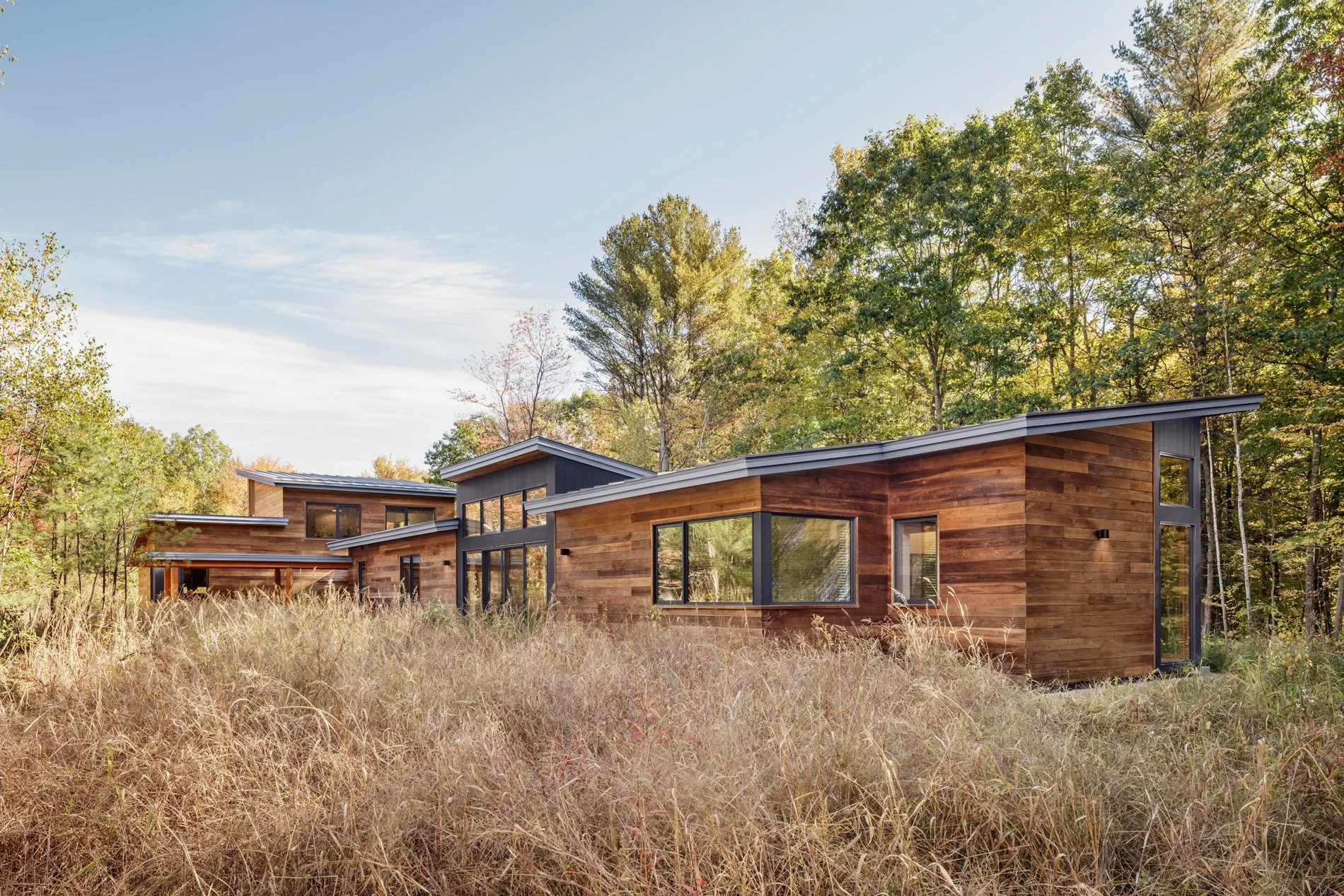
The caramel-colored Cambia cladding on this home in North Yarmouth blends beautifully into the woodsy landscape, just as its owners hoped it would. PHOTO: FRANCOIS GAGNE
Cambia-Clad House and Studio in North Yarmouth
When Martin Kremer and Barbara Merson built their high performance forever home more than a decade ago, it was after years of planning, budgeting and the creation of a long brief for their architect, Harry Hepburn. Among their priorities were a strong visual connection to the outdoors, maximizing the use of local materials and minimizing exterior upkeep.
To fit in with the wooded setting, “We didn’t want a house that stood out,” Kremer says. “We wanted a sort of camouflage. And we didn’t want anything that would need maintenance—no gutters, no skylights, no painting—nothing.”
BRIBURN and Taggart Construction of Freeport brought their wish-list vision to life.
BRIBURN had successfully used a thermally modified wood from New Hampshire called Cambia on other projects and recommended it for the cladding because of its rot- and insectresistance. The couple felt the initial cost could be worth it and still agree it was the right choice. “The wood seems in as good condition as when it was installed,” Kremer says. “The integrity of the material is intact.”
With the home’s varied exposures to sunlight and moisture, the boards have discolored unevenly with age, a characteristic of thermally modified wood that Hepburn had warned the couple about. But this was no drawback for them, as it has helped the home merge with the landscape even better. (And to be clear, while all wood will weather in color over time, longevity of color is completely different from the longevity of the material itself.)
What kind of maintenance has the wood required? “Absolutely none,” Kremer says. Would he recommend it to other homeowners? That seems to be a matter of personal taste. “It depends. If they’re looking for something uniform, then maybe not, unless they want to stain it.”
But for his part, he’d definitely choose the same material all over again. And endorsements don’t come more ringing than that.

This article appeared in the Spring 2026 edition of Green & Healthy Maine HOMES. Subscribe today!
Find Maine experts that specialize in healthy, efficient homes in the Green Homes Business Directory.