
Built for adventure at Mt. Abram
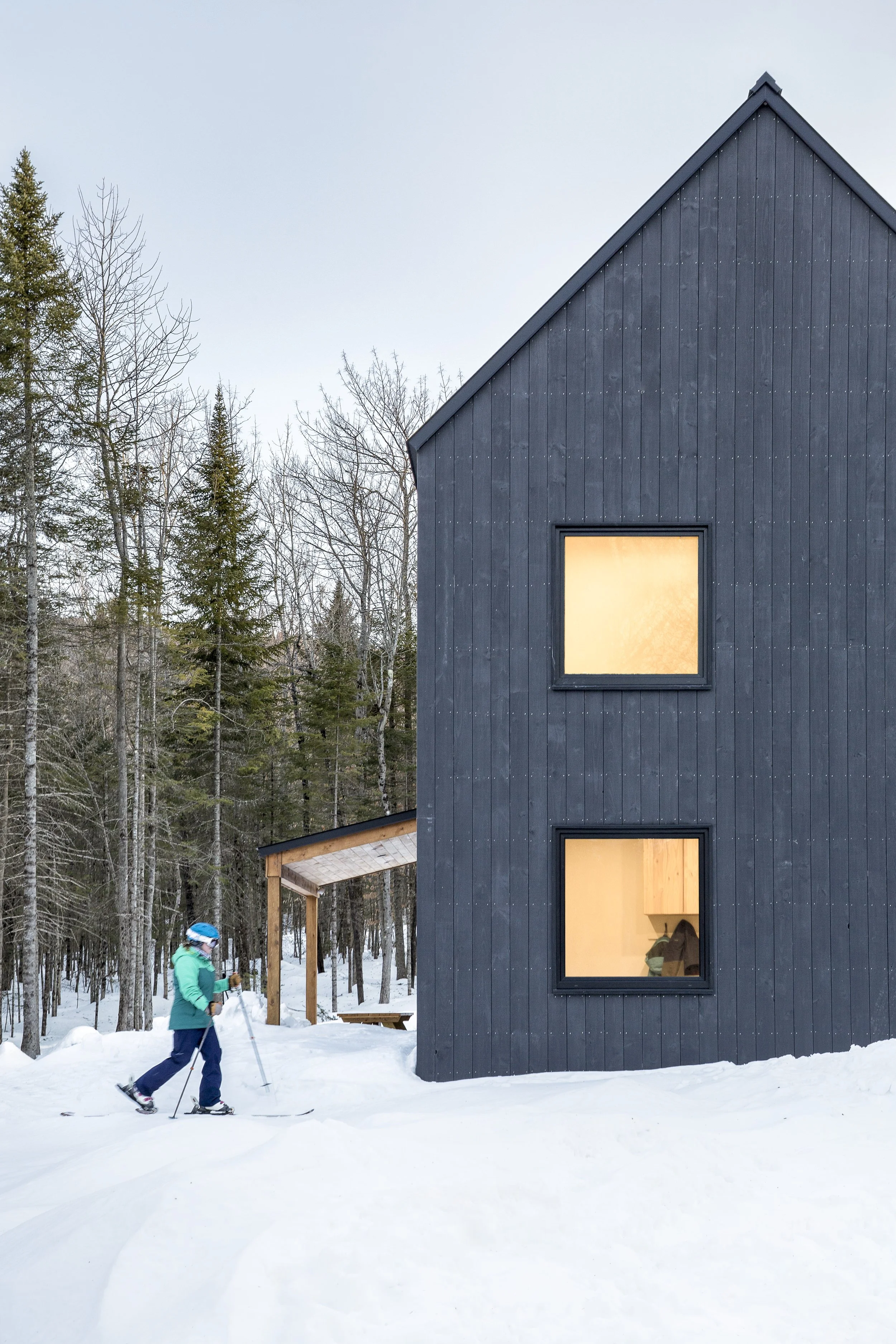
Nestled at the base of Mount Abram, this ski in/ski out home provides easy access to hit the trails year-round.
By June Donenfeld
Photography: Jeff Roberts
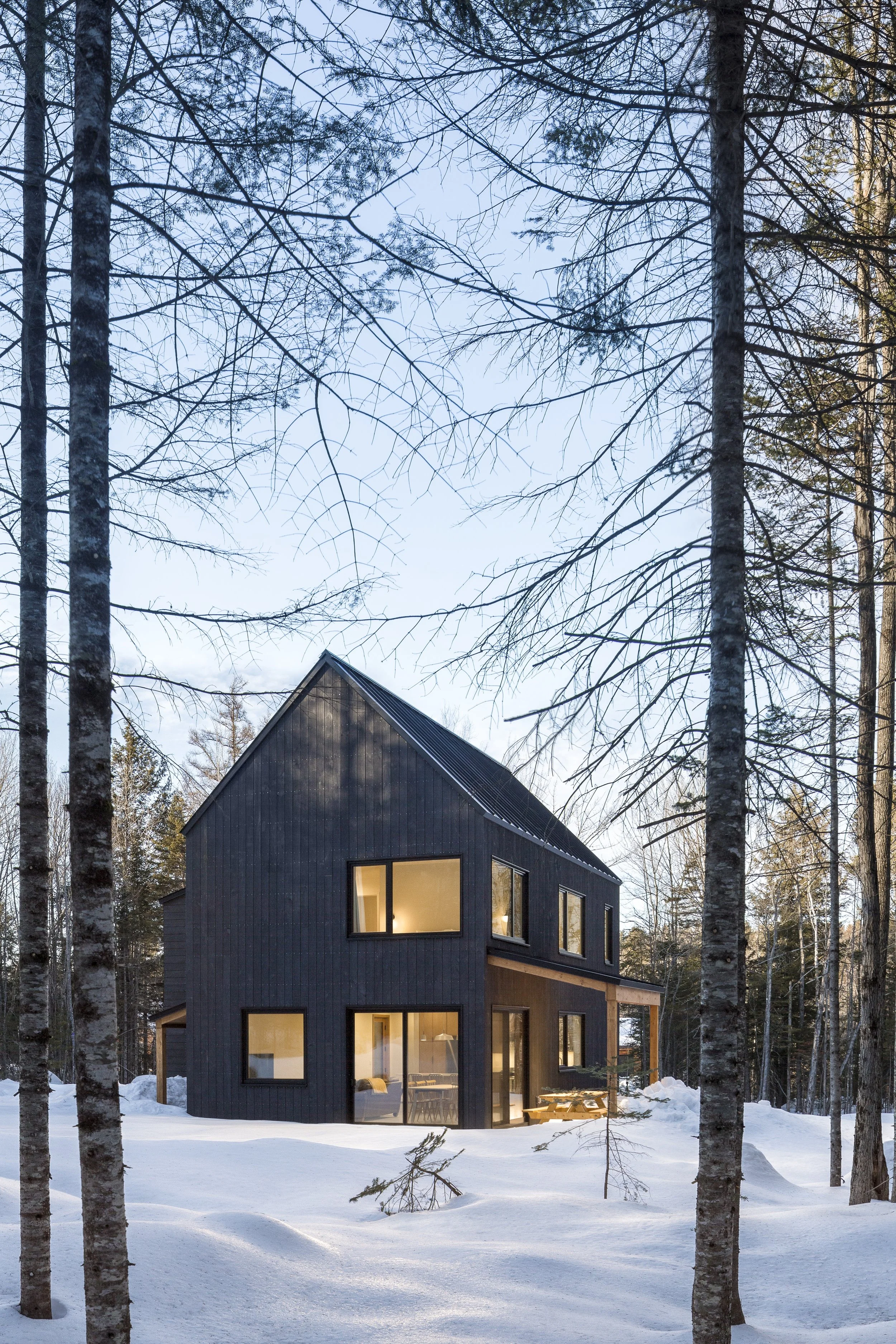
ON FRIGID winter evenings, warm, welcoming light streams from the large windows of Charlotte and Luke’s* slopeside retreat in western Maine. Tucked away in dense woods at the base of Mt. Abram, the two-story ski-in, ski-out house is “comfortable, even on the most bitterly cold, windy winter nights,” Charlotte says. And though it is located at the base of a busy mountain close to a large ski lift, inside, stillness reigns.
For Charlotte and Luke, young professionals in finance and engineering, respectively, their “mountain house,” as they call it, was a dream many years in the making. They had skied at Mt. Abram for many years but only began serious house hunting there in early 2020. Yet time and again, the available homes they visited fell short, whether because of the extensive renovations needed or ceilings too low for Luke’s lofty frame. Their luck changed when they discovered a mountainside plot of land for sale in an ideal location and contacted longtime friend and architect Kevin Browne to explore its potential for realizing their vision. Once they got his seal of approval, they purchased the parcel and, on Browne’s recommendation, Charlotte says, sought out builders “to get feasibility feedback before going too far with the design.”
Eric List, owner of WinterHaven Custom Builders in Bethel, shared their vision of a high-performance, small modern home. “That early collaboration was key,” Charlotte says. “With Eric’s help we refined our early design concept to arrive at something feasible to build within our budget and meet our goals.”
List was only too glad to confer. In his 25 years of building experience, he has found that these preliminary discussions are essential to a smooth process and successful outcome. “If the homeowner works only with the architect, I miss those decision-making sessions,” he says, “but if I’m included early, it becomes easier to help them get what they want—and there is continuity in design decisions.”
These goals included making the most of the stunning mountain views and creating a durable, functional base for outdoor activities in all four seasons. But at the very top of their wish list was a well-designed, high-performance home in as small a footprint as possible to keep operating costs low—and minimize the house’s environmental impact as a part-time second home. So, they allotted a large portion of their budget to building a sturdy, heavily insulated, airtight shell, focusing on things that would be difficult to change later, like the framing, windows and roof.
Construction on the 1,800-squarefoot, three-bedroom, two-and-a-half bath house began in early 2021 and finished a year later. Outside, the home has clean, uncluttered lines; inside, it is filled with a wealth of high-performance features that make it a haven of comfort and peace. “Even though it is a small house with a simple form, the high-performance aspect adds complexity,” Charlotte says.
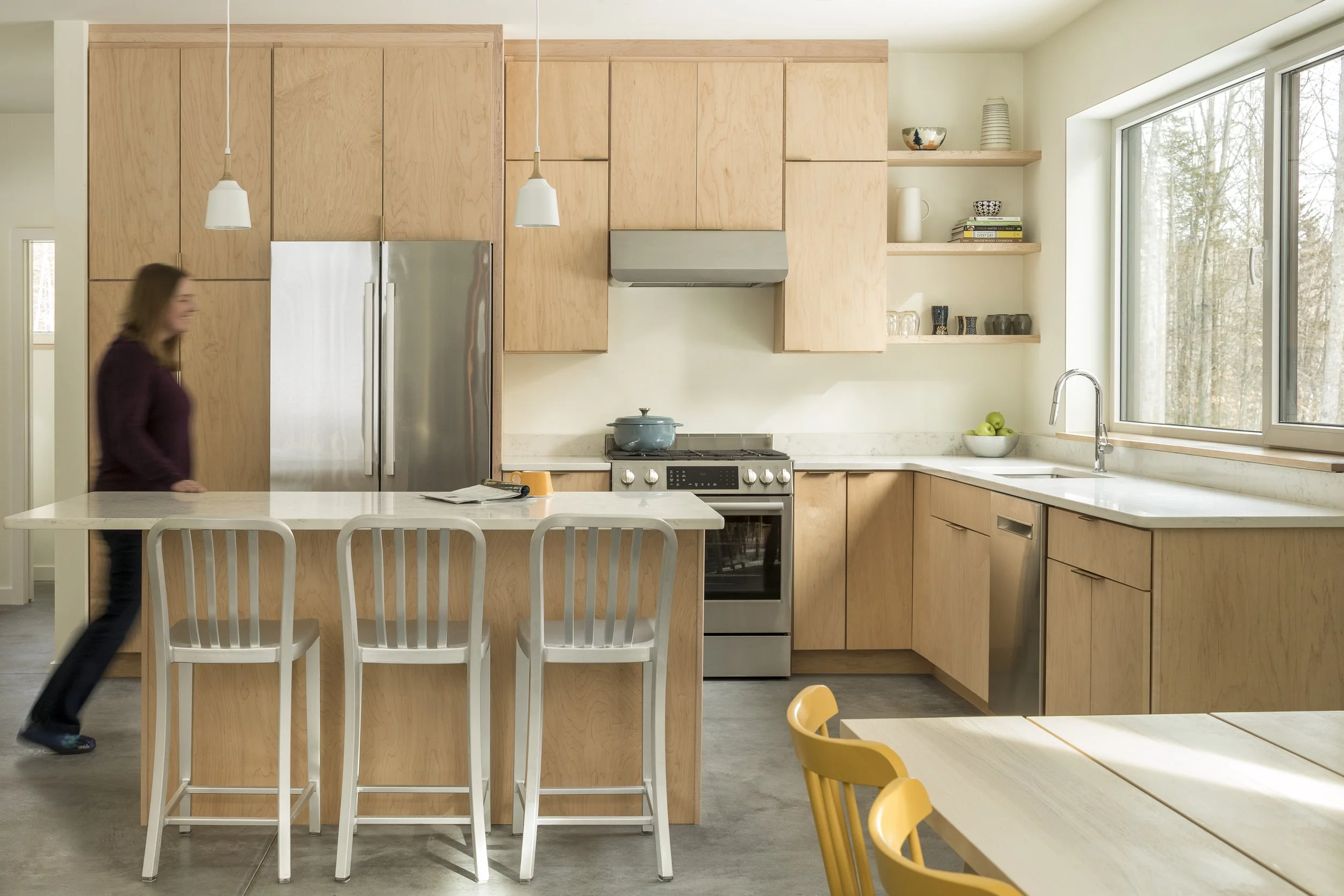
Large, tilt-and-turn windows bring the outside into the kitchen/dining area, where pale, natural colors and sleek surfaces make cleanup a snap after all the convivial meals with family and friends.
If you had X-ray vision, you could see that complexity at every single level. The foundation is a concrete slab underpinned by Glavel®, a lightweight, low-carbon foam glass gravel manufactured at a solar-powered factory in Vermont from 100% post-consumer recycled glass. The material replaces rigid foam insulation and crushed stone in a single layer that reduces thermal bridging, speeds up installation, and allows for continuous insulation detailing.
The multi-layered building envelope has best-in-class weather and vapor barriers and a rainscreen to keep damaging moisture at bay. There are many steps to executing this elaborate envelope properly, which takes time and an extra attention to detail. “Eric and his team excelled at this,” Charlotte says. “Each and every layer, exterior wall penetration and transition was carefully considered and perfectly sealed.”
Combine this envelope with other high-performance elements and you have a home that is far above Maine’s building code minimum, with attic and double-thick exterior walls packed with cellulose; triple-paned windows and doors (from Maine company Pinnacle Window Solutions); and a ducted ERV to ensure a steady inflow of fresh, filtered air and outflow of stale air. The home is heated by a radiant underfloor system fueled by a wall-hung propane boiler that also heats the water. Thanks to the unit’s high efficiency, along with the insulation and air sealing, the family uses about one-third of the propane of a typical home in the area, and the house stays so cozy that the mini-split heat pumps are only rarely used to supplement the heat in the bedrooms. There is no generator, but the couple installed a transfer switch in case they ever needed to bring in a temporary one. “The house retains heat so well,” Charlotte says, “that we have no concerns over it staying at temperature if the power went out for several days.”
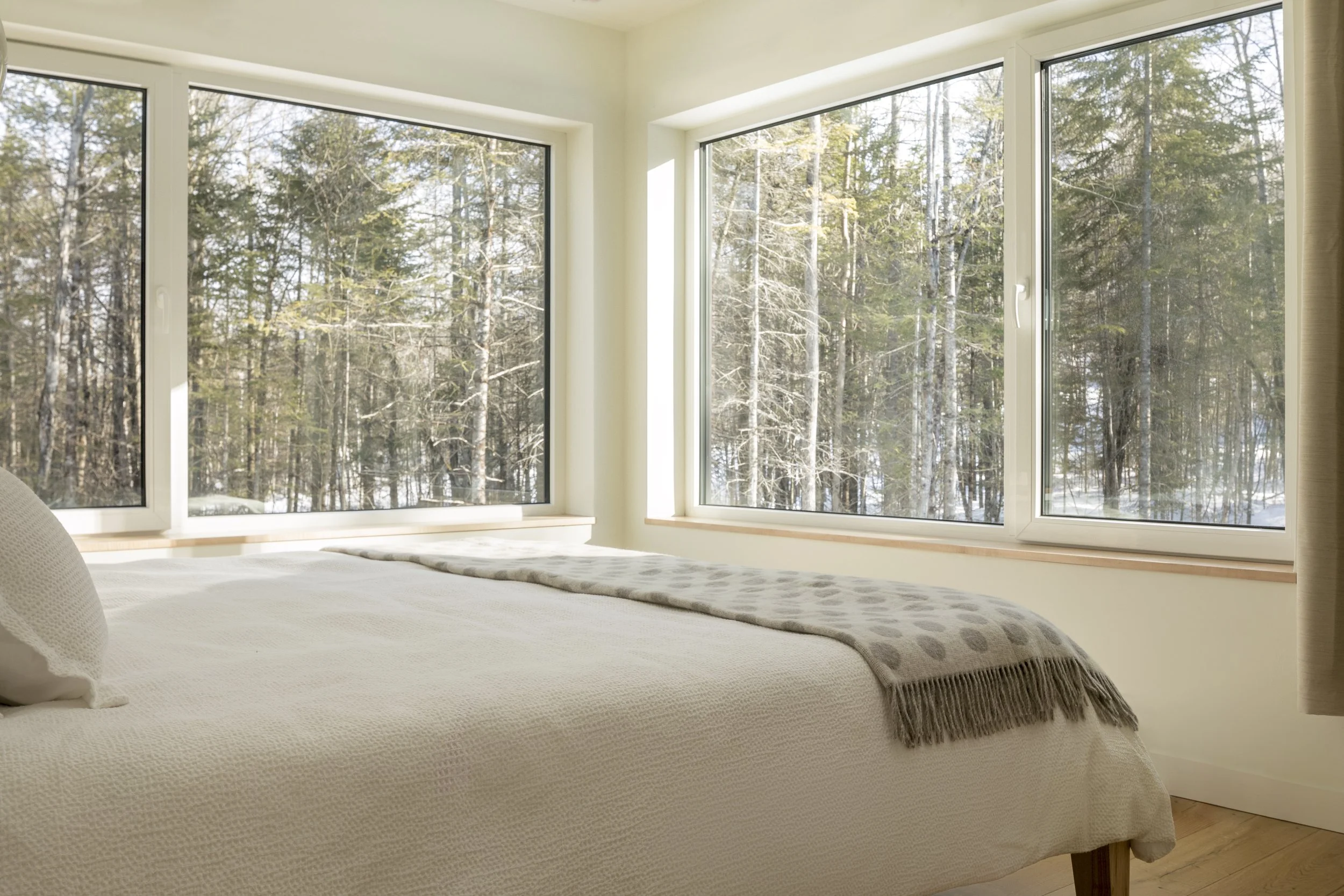
With magnificent, mature trees stretching as far as the eye can see, the views from the enormous windows in this arbor-like bedroom make for a serene, restorative setting all year long.
Drainage was the biggest construction challenge, as the property is at the base of a mountain with abundant rain and snow runoff. But List had the foresight to site the home high and dry, with ample foundation perimeter drainage, and expert excavator Taylor Moore created additional drainage that channels water around and away from the house. “The house is essentially on an island with underground drainage pipes and culverts encircling it,” Charlotte says.
The other big challenge was the dramatic rise in the cost of building materials mid-construction. But the couple found simple solutions that added up to real savings, eliminating some windows, for instance, ordering the exterior doors unfinished on the inside, using stock cabinetry, and skipping tile showers in favor of fiberglass, “which also happens to be much easier to clean,” notes Charlotte.
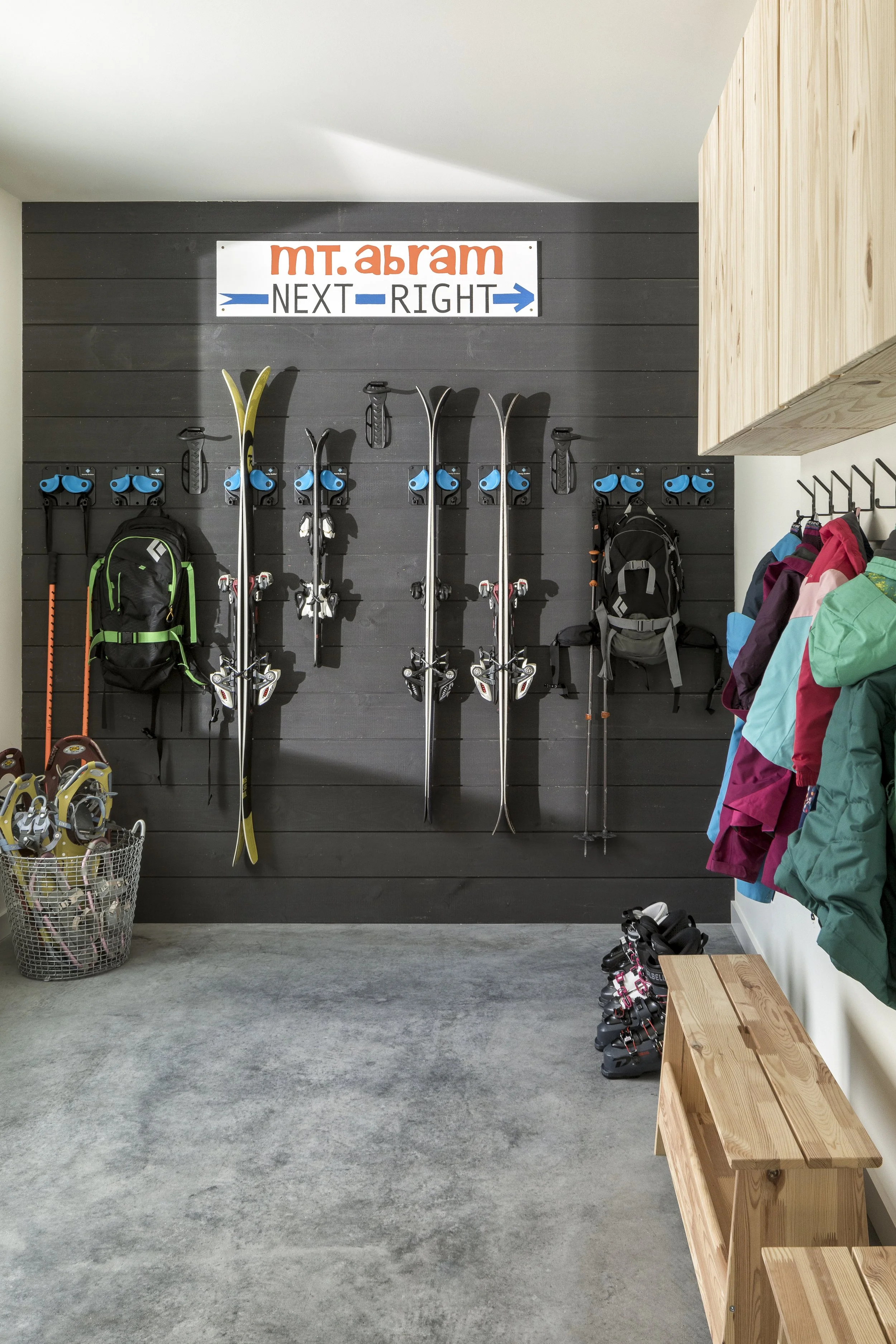
There's a place for everything in this rugged, supremely functional gear room, with plenty of seating to make putting on that gear (and taking it off) quick and easy.
The couple’s design choices were inspired by modern Nordic-style homes made of simple, durable materials. The house is clad in Maine spruce siding and topped with a dark standing seam metal roof. Inside on the first floor, there are unadorned light-maple kitchen cabinets and tough concrete flooring that can take anything an active, outdoor lifestyle can throw at it, especially in the gear room, where skis, bikes, snowshoes and outerwear cohabit peacefully. This room was one of the must-haves, but Charlotte and Luke only fully appreciated its functionality once it “swallowed loads of wet ski gear after a fun day on the slopes,” she says. A sleek custom staircase leads upstairs, where there are pale wood floors and large windows that maximize the light.
Outside, Charlotte and Luke made sure tree-clearing was kept to the minimum needed for the house, septic system and driveway, leaving the remainder of the original wooded area largely untouched, except for ski trails that fill in nicely with native ferns in the spring. They repurposed the boulders dug up for the foundation as retaining walls and landscaping, and planted native wildflower seeds to add color and native tree seedlings to fill in the sparse areas left behind by old logging roads. They love their mountain retreat, and though they originally envisioned it primarily as a winter house, they and their young daughter, Sadie, are up there far more often than they anticipated, enjoying it in all four seasons.
The couple are clear on the keys to the project’s success: a great architect and builder, investing in a high-performance shell, teamwork and, above all, being engaged in the process. “It is your house, and you will live with the decisions and quality long after the builder and architect have moved on,” Charlotte counsels, “so it’s important to understand each step and implications of the options that are being implemented.”
*Family names changed to protect privacy
Project Team
DESIGN: Kevin Browne Architecture
BUILDER: WinterHaven Custom Builders
ENGINEER: Structural Integrity Inc.
EARTHWORK: Western Maine Excavation
HARDSCAPING: White’s Yardworks
ROOFING: Cliff Harding Roofing
PHOTOGRAPHY: Jeff Roberts Imaging
Left: While snow piles up outside, all is cozy inside at this contemporary, high-performance home in western Maine. Nestled among the trees at the foot of Mt. Abram, the ski-in, ski-out house provides immediate access to the slopes and a warm welcome at the end of the day.
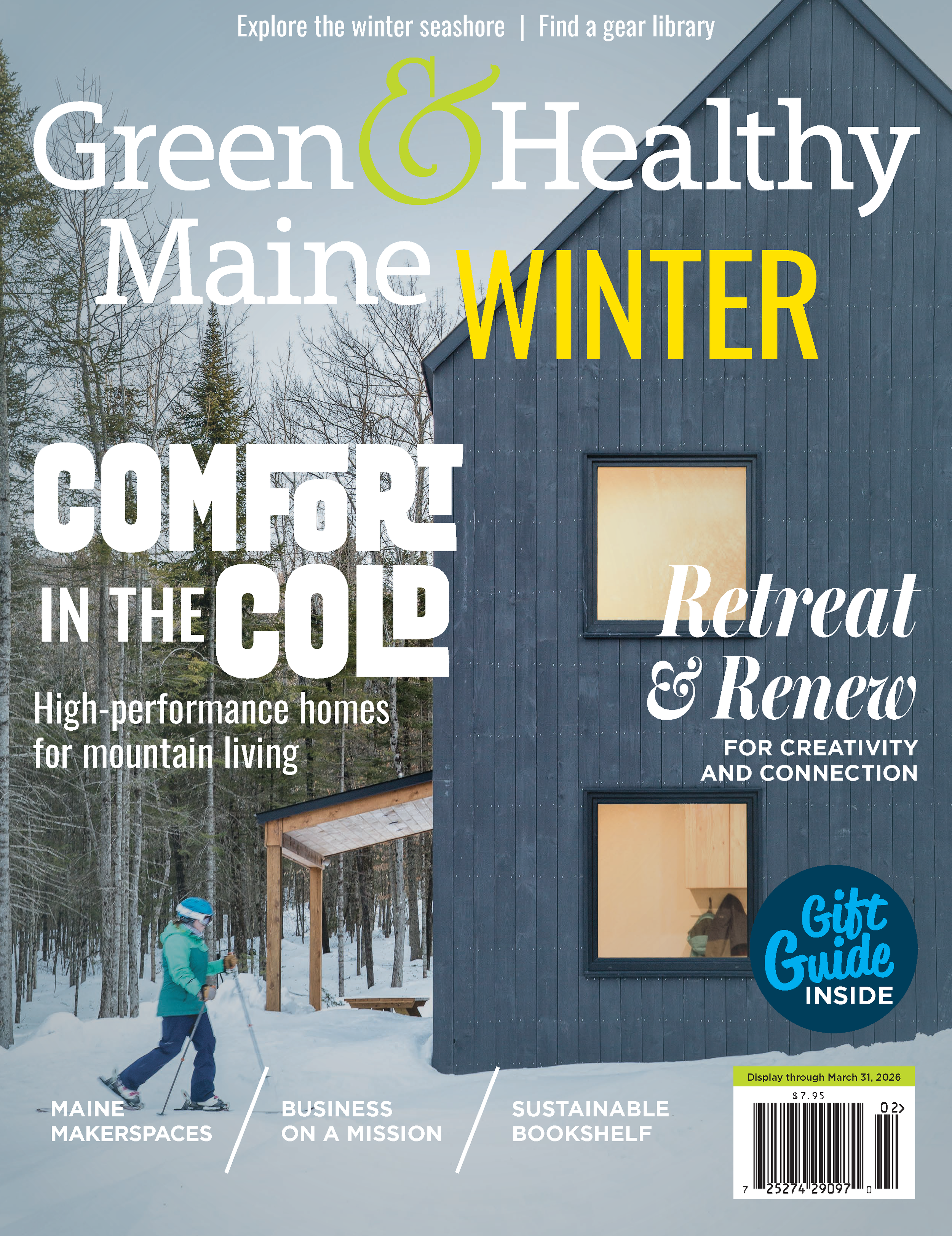
This article appeared in the Winter 2026 edition of Green & Healthy Maine. Subscribe today!
Find Maine experts that specialize in healthy, efficient homes in the Green Homes Business Directory.