
Why contractor licensing matters for homeowners and the building industry

Kitchen by JW Design Build. PHOTO COURTESY OF THE HOME BUILDERS & REMODELERS ASSOCIATION OF MAINE.
By Emily Aborn
Many homeowners are surprised to find out that the tradespeople building their staircase and framing their homes aren’t necessarily licensed for the job.
Electricians, plumbers, fuel technicians, boiler operators, elevator inspectors, architects and lead abatement contractors are currently the only home trade professionals in Maine required to hold state-level licensure. According to the state’s Office of Professional and Occupational Regulation, everyone else in the building trades may be regulated at the municipal level, the state level or not at all.
Contractors in the trades are beholden only to local municipal permits, building codes and a written contract that serves as consumer protection for construction or repair work over $3,000.
Licensed electrician Peter Maillet has walked into plenty of houses after a paid contractor either provided work they weren’t qualified for or left the homeowner thinking the job was done when it wasn’t. One example, Maillet recalls, involves a client who hired a non-electrician contractor to fix some wiring in her house. Later, when Maillet was called in to resolve a separate electrical issue, he discovered nothing was grounded properly and the work had been left dangerously incomplete.
While Maine remains one of just six states with no licensing requirement for general contractors, it recently added new licensing requirements for architects.
Since Maine LD 1393 went into effect in July 2026, Maine architects must complete 12 hours of continuing education in health, safety and welfare topics before renewing. Previously, Maine was the only state in New England (and one of just four nationally) without a continuing education requirement for architects, according to testimony submitted by AIA Maine.
Not everyone agreed the change was necessary. In testimony opposing the bill, the state board’s regulatory manager noted it had disciplined only seven architects in the past decade, none for practice-related violations, and questioned whether a new continuing education mandate addressed an actual public protection concern.
Architect Ashley Hopwood Farrar, founder of Meldrum Design, says that earning an architecture license is an enormous undertaking. After earning a master’s degree in architecture at Northeastern University, she spent five years logging intern hours across required categories under a mentor. Then came six different licensing exams. Even with late nights studying code books and textbooks, ample preparation and hands-on experience, Farrar failed one and had to retake it. “It’s very, very common to fail,” she says. “I don’t know anyone who passed all of them on the first try.”
Qualifying continuing education hours can come through NCARB, AIA, the board itself, and other approved activities. Farrar, who has always been committed to learning and education, is now trying to determine how best to fill the requirement in a way that will benefit her career, community and clients.
Maillet, whose business is succinctly named The Electrician Maine, started out with a helper’s license, which was obtainable online and permits an individual to work under a licensed electrician. While working, he took night classes and completed a 576-hour course (over approximately two years). After a 40-hour code update course, he went on to take his licensing exam, a 50-question test ensuring he could apply and understand electrical codes. Maillet now holds a Limited Master License, good for residential work. He is required to renew every two years as well as complete a 15- hour code update course when the state adopts a new code cycle (every three years).
Electricians and architects navigate different licensing requirements. Both invest substantial time, money and energy to renewing. These examples depict the gap between licensed contractors and those with no state licensing at all.
As this divide grows, it raises issues for homeowners and professionals alike. “Right now, Maine consumers have almost no protection when they hire a residential contractor, and it’s hurting the reputation of the entire industry along with the homeowners,” says Heather Raisanen, executive director of the Homebuilders & Remodelers Association of Maine (HBRA).
Twice, efforts have been made to pass LD 1226, a bill that would have established a comprehensive licensing system for residential building contractors in Maine.
The bill passed both the House and Senate on its merits both times but died on adjournment after failing to secure funding, most recently on April 29, 2026.
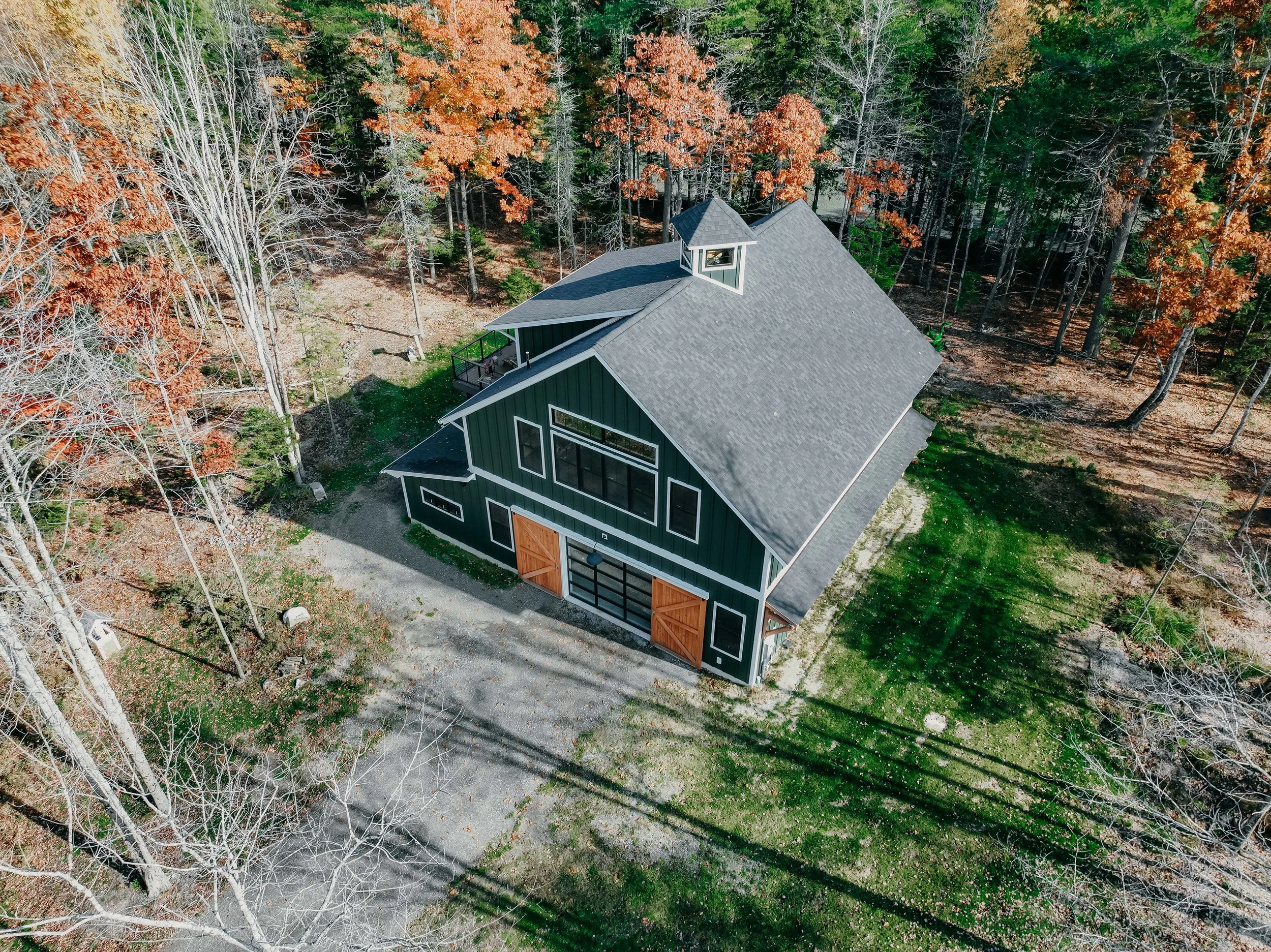
Harpswell barn by JW Design & Build. PHOTO COURTESY OF THE HOME BUILDERS & REMODELERS ASSOCIATION OF MAINE.
For most HBRA members, a lot of this is already standard practice, codifying what a responsible builder already does. As written, under LD 1226, residential contractors on jobs over $15,000 would need to:
Get licensed through a new Residential Construction Board
Carry up to $500,000 in general liability insurance and workers’ compensation
Complete continuing education (6 hours per annual renewal)
Pay licensing fees (up to $500 to apply, $250 to renew)
HBRA is a proponent of the bill because it means unlicensed competitors can’t underbid their members by circumventing insurance and training costs. For clients, it means a state license number they can check before hiring someone as well as a safeguard.
Since 2020, the Attorney General’s Consumer Protection Division has received over 3,200 contractor fraud complaints totaling hundreds of thousands in alleged losses. These are usually treated as civil matters rather than criminal, and homeowners are left to pursue their own court cases. With no license to suspend or board in place, offending contractors aren’t being held accountable.
In Raisanen’s words, “Licensing raises the floor for the whole industry, gives the Attorney General’s office real enforcement tools, and gives homeowners a way to vet who they’re hiring before they sign a contract.” She is cautiously optimistic that LD 1226 will pass the third time but has learned not to get ahead of the process.
Until things change, the burden of vetting contractors falls on the homeowner, but there are concrete ways to do it well:
For applicable trades, ask contractors to provide their licensing number and verify it through the state’s online lookup (pfr.maine.gov) before signing anything.
For general contractors, ask for references from recent or similar projects.
Confirm proof of insurance in writing.
Ensure any home contracting work over $3,000 includes a written contract (as required under Maine law).
Ask a trusted contractor or trade professional to provide you with a referral.
Your architect, electrician and plumber all have a license in hand ready to let you know they’re taking this seriously. Your building contractor should be able to do the same. But, until the licensing laws change, a little upfront homework is the best protection you have.

This article appeared in the Fall 2026 edition of Green & Healthy Maine HOMES. Subscribe today!
Find Maine experts that specialize in healthy, efficient homes in the Green Homes Business Directory.