
Landscape Invaders
How invasive plants threaten Maine’s ecosystems—and what you can do about it
By Andrea Lani
BY NOW MOST OF US are familiar with the dense thickets of invasive plants like Japanese knotweed, multiflora rose and phragmites grass that cloak roadsides, riverbanks and wetlands. But new invasive threats continue to emerge as seeds and plant material travel around the country—and the world.
“What makes a plant invasive in Maine is a nonnative species that can spread into minimally managed habitat where it can cause economic or environmental harm by developing self-sustaining populations that become dominant over or disruptive to native species,” says Chad Hammer, Invasive Plant Biologist with the Maine Natural Areas Program (MNAP), within the Maine Department of Agriculture, Conservation, and Forestry.
The loss of native plants means a loss of food sources and habitat for the insects, birds and wildlife that have evolved alongside them, according to Hammer. Invasive species can also negatively affect the diversity and structure of our forests and can displace crops, posing harm to Maine’s forest products and agricultural industries.
To address the threats of newly emerging invasive plants in Maine, biologists with MNAP and other agencies follow a process of early detection and rapid response. The state’s Terrestrial Invasive Plant Scientific Advisory Committee evaluates plants to determine their potential to become invasive in Maine, and species that pose the greatest risk of taking root in the state become priorities for eradication. Hammer notes that three plants are of particular concern for Maine right now: Japanese stiltgrass, mile-a-minute-vine and perennial pepperweed.
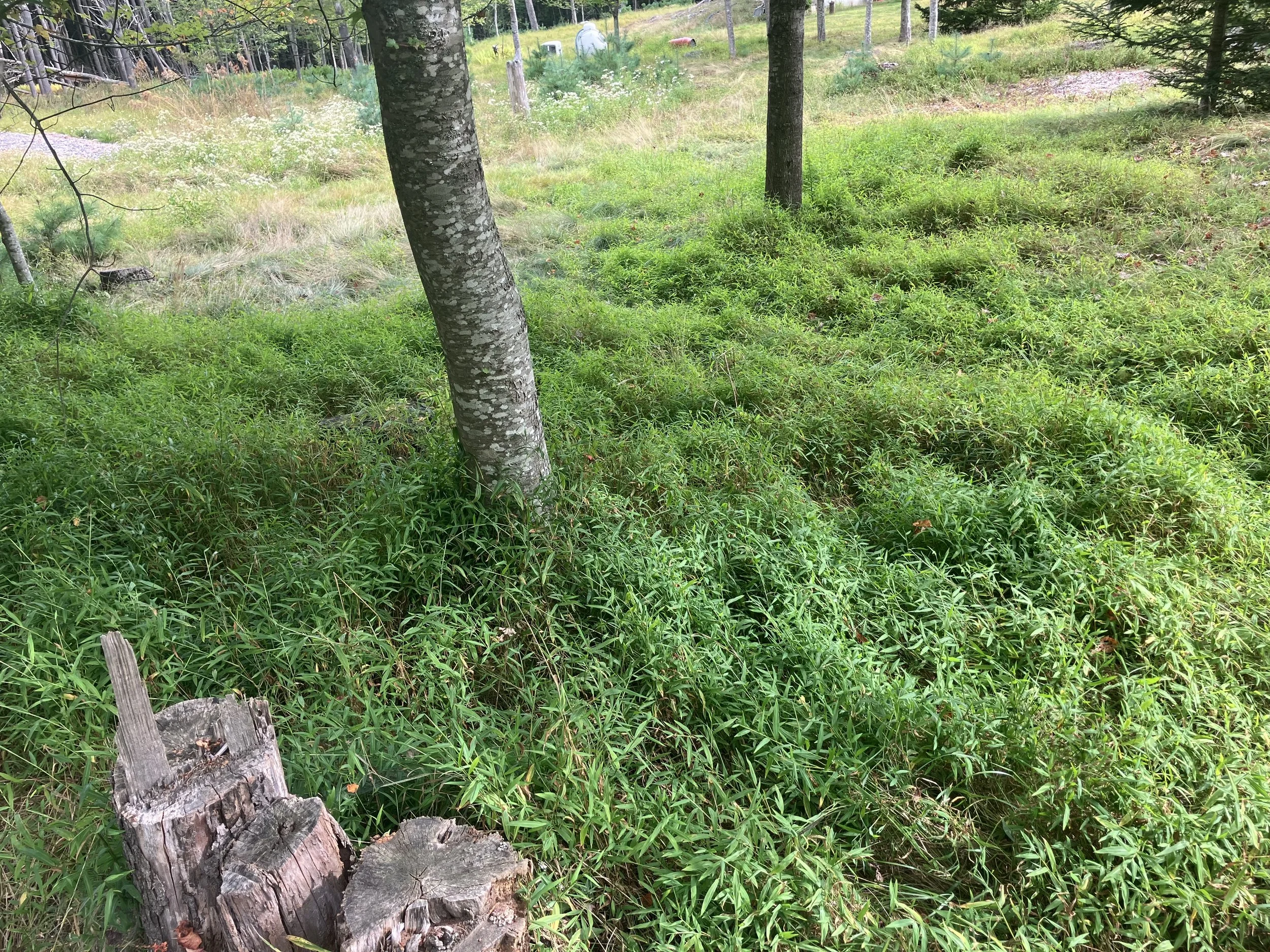
Japanese stiltgrass is an inconspicuous annual grass that has hitchhiked into the state in the soil of nursery plants. So far it’s been found mostly in York and Sagadahoc counties with recent reports in Kennebec and Hancock counties. “A lot of people don’t know they have it,” Hammer says, “until it’s taking over their yard and spilling out of their gardens.” When the grass dies at the end of the season, it leaves behind a dense thatch that prevents the seeds of trees and other plants from being able to germinate and creates a fire hazard.
True to its common name, mile-a-minute vine is a fast-growing vine that, notes Hammer, “overtops everything for acres and acres, kind of like kudzu.” It has become a major problem in New York and Pennsylvania and has been reported in—and removed from—four locations in Maine. In all four cases, the vine came into the state via garden center plants.
Perennial pepperweed has become a problem in salt marshes in Massachusetts and New Hampshire. It has been found in five locations in Maine, but, according to Hammer, control efforts have reduced this number to one or two populations that he anticipates will be eradicated within two years.
While the problem of invasive plants can seem insurmountable, Hammer finds a source of optimism in the resilience of nature and the people who care about the landscape, saying, “The passion and the caring nature of the people are our best hope.”
STEPS FOR CONTROLLING INVASIVE PLANTS IN YOUR GARDEN AND YARD
Armed with knowledge, homeowners can follow an early detection and rapid response process for controlling invasive plants on their own properties.
Learn to identify native species. The 46 species listed in the Maine Natural Areas Program’s Maine Invasive Plants Field Guide cover about half of the invasive aquatic and terrestrial plants that can be found in Maine. The guide includes photographs, identification information and recommended methods for control. The Native Plant Trust’s online identification key Go Botany and mobile apps such as Seek by iNaturalist can also aid in plant identification.
Remove invasive ornamentals and plant native species. Always inspect and keep an eye on plants or trees acquired from nurseries for signs of invasive plants having migrated into your garden with your plantings. The Horticulture Program of the Maine Department of Agriculture, Conservation, and Forestry offers a range of educational materials on minimizing the spread of invasives through gardening practices, including “Plant This/Not That” recommendations for replacing invasive plants with native species. Wild Seed Project also offers educational resources and seeds for the propagation of native plants in the northeast.
Monitor your land. Watch areas where the ground has been disturbed by both human behavior, like digging and filling, and natural phenomena, like flooding and fallen trees, for signs of invasive plants moving in and taking advantage of the open soil. Keep an eye on high-dispersal corridors such as waterways, roadsides and trails where the seeds of invasive species are more likely to be spread.
Report sightings of invasive plants. Maine has partnered with iMap Invasives to track and map invasive species. Land managers and individuals can submit sightings of invasives to this database using either the desktop interface or mobile app.
Practice Integrated Pest Management (IPM). IPM is a landscape evaluation approach to controlling invasive plants using a range of tools and techniques with the goal of reducing the need for chemical treatments. IPM emphasizes mechanical removal of unwanted plants, such as mowing, uprooting and burning, with the responsible use of chemical treatments only where necessary.
Learn more. MNAP offers trainings and outreach programs on identifying and managing invasive plants around the state, often in partnership with the University of Maine Cooperative Extension, Soil and Water Conservation Districts, or District Foresters.
RESOURCES
Maine Natural Areas Program’s Maine Invasive Plants Field Guide
The Horticulture Program of the Maine Department of Agriculture, Conservation, and Forestry “Plant This/Not That” recommendations
University of Maine Cooperative Extension On identifying and managing invasive plants

This article appeared in the Summer 2026 edition of Green & Healthy Maine. Subscribe today!
Find Maine experts that specialize in healthy, efficient homes in the Green Homes Business Directory.