Where is this wood from?
Learning the language of lumber stamps
By Jennifer Dann
Images courtesy of Local WOODworks
If buying local whenever possible is an important aspect to your green home journey, learning a bit about the language of lumber stamps can be an empowering way to “read” how and where your lumber was processed.
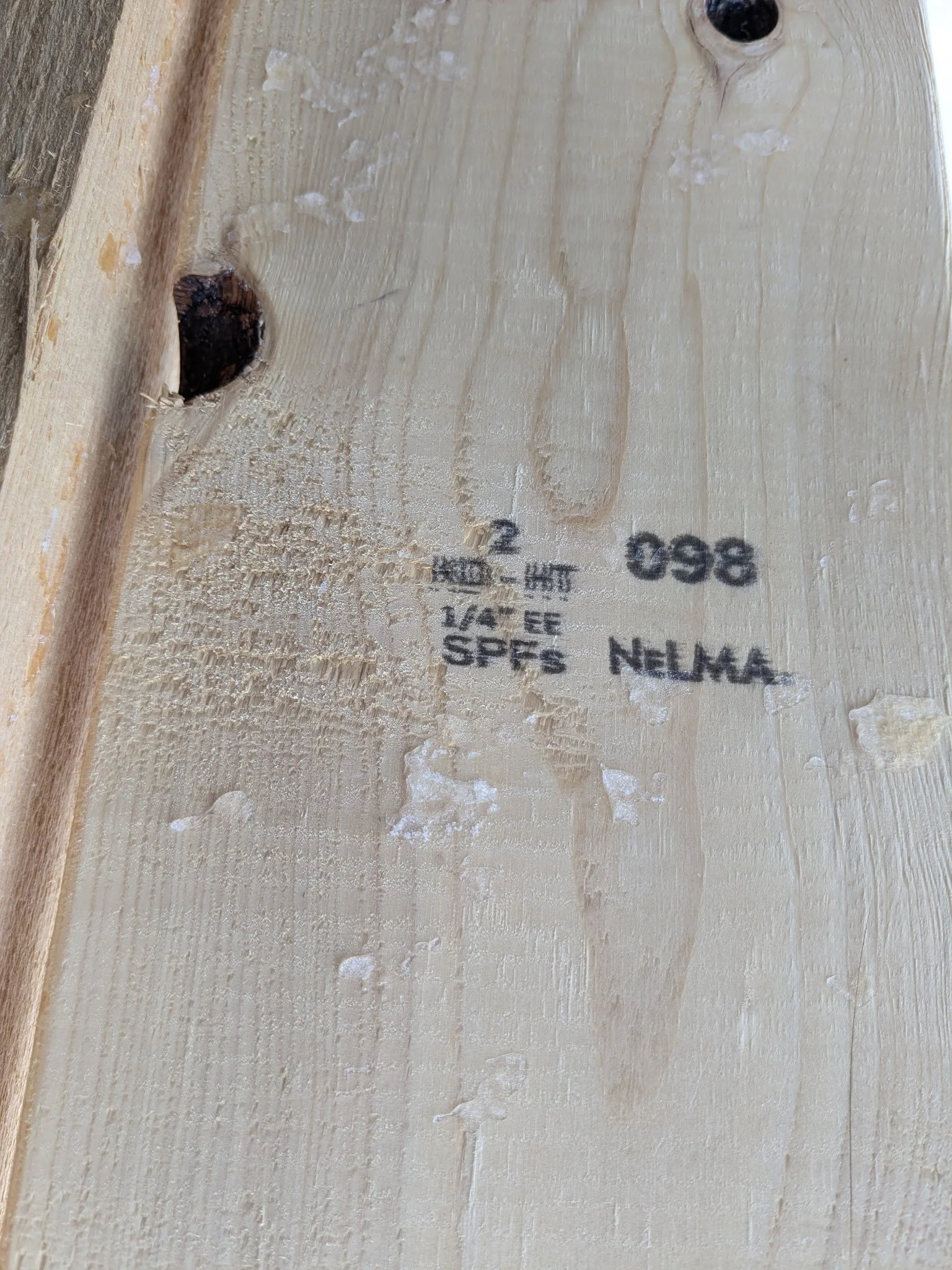
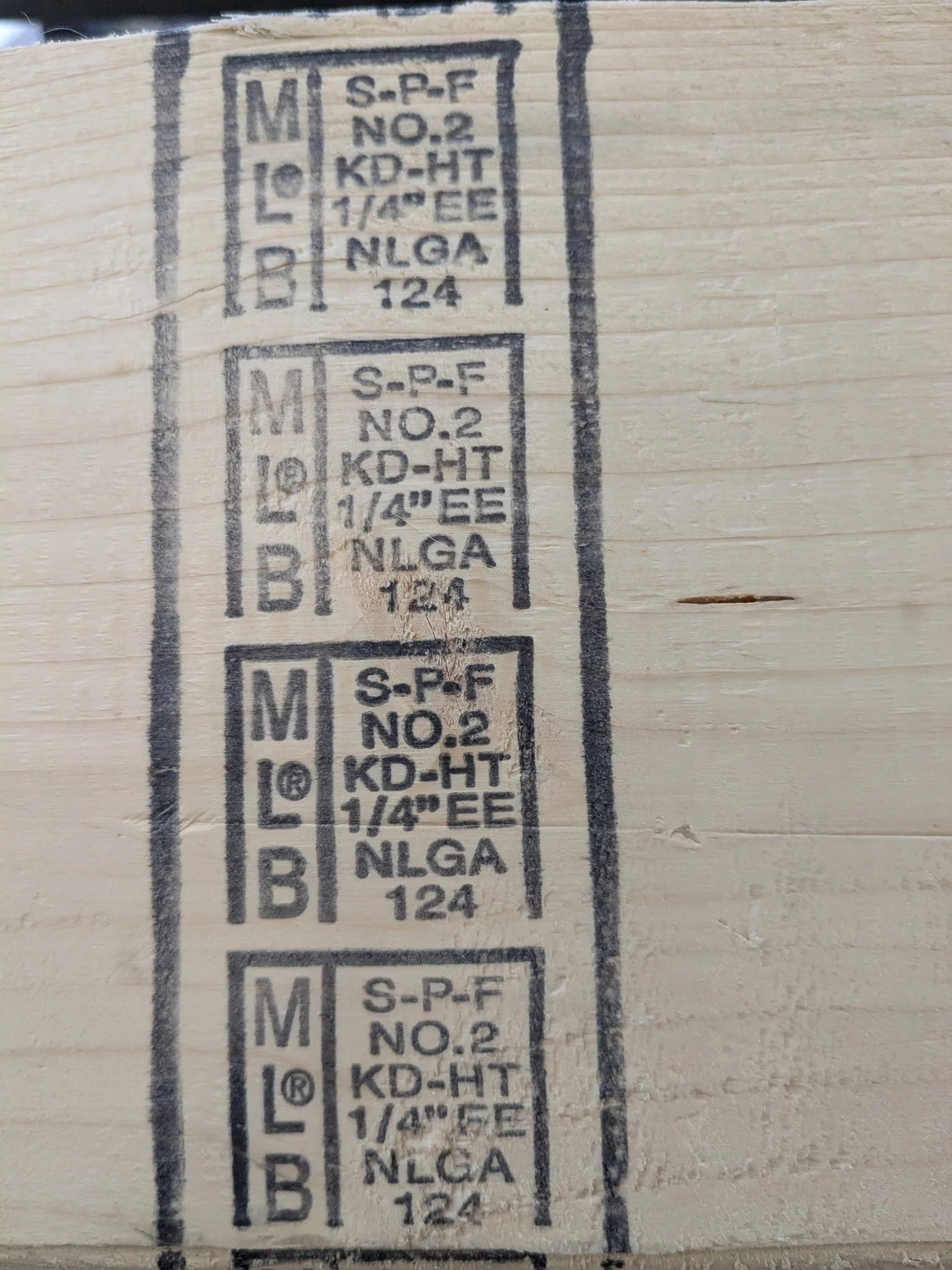
Photos 1 and 2 are of lumber purchased from the same wholesale supplier. First, let’s look at the information that’s the same on both:
S-P-F is short for Spruce-Pine-Fir, wood species that are often processed together. The lumber in Photo 1 also has a small “s,” which denotes that the wood used to mill the lumber was harvested south of the Canadian border.
The 2 on these boards indicates it is Number 2 grade lumber, a common wood for framing. Wood grades—based on strength, appearance, and the number of defects—can include Select Structural, No. 1 and Better (BTR), No. 2, Construction Grade, No. 3, Stud Grade, Standard Grade, and Utility Grade.
KD-HT means the lumber was kiln-dried (KD) to remove moisture and heat-treated (HT) to kill pests.
¼” EE means that it has a one-quarter-inch eased edge (EE), indicating sharp edges have been rounded for ease of handling.
Now that we know that these two pieces of lumber are the same product, let’s look at the unique information that tells us where the lumber was milled:
Graded lumber is stamped by a regional grading authority. In Photo 1, NeLMA denotes the Northeast Lumber Manufacturers Association, the authority for the Northeast and Great Lakes regions of the United States. The NeLMA stamp is one key thing to remember to look for when searching for local wood; lumber milled in Maine will have the NeLMA stamp. In Photo 2, NLGA denotes the Canadian National Lumber Grades Authority. NLGA is separated into several regions, including the Maritime Lumber Bureau (MLB), also seen on the stamp in Photo 2.
Each sawmill has its own code used by the grading authority. An internet search can usually reveal the mill’s name and location. In Photo 1, 098 is Pleasant River Lumber in Enfield, Maine. In Photo 2, 124 is the code for Scotsburn Lumber in Scotsburn, Nova Scotia.
Lumber may also be stamped with a forest certification— such as the Sustainable Forestry Initiative (SFI) or Forest Stewardship Council (FSC)—indicating it has been tracked from stump to retail through a chain of custody. Certified wood is a seal of approval for forestry that protects timber stocking levels, water sources, soil health, and wildlife.
You may be wondering why you need to worry about any of this in Maine—a forested state that produces lumber. A recent trip to a large retail store in central Maine illustrates the challenge: The two choices for a 2” x 4” board were one milled in California (Photo 3), and a board milled in Quebec, Canada (Photo 4). The reasons for these non-local choices involve complex wood flow and long supply chains, with large mills often dominating national retail markets.
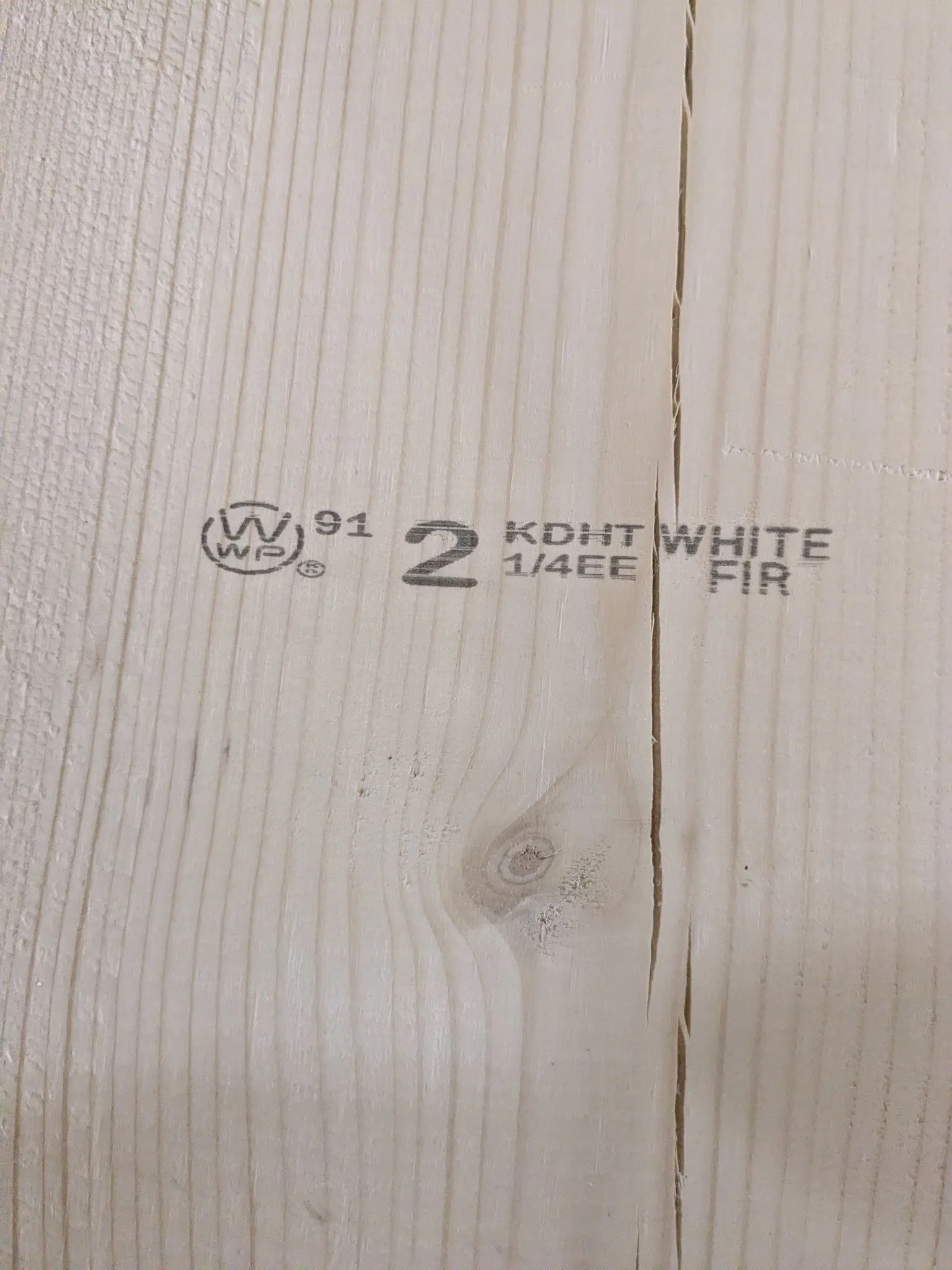
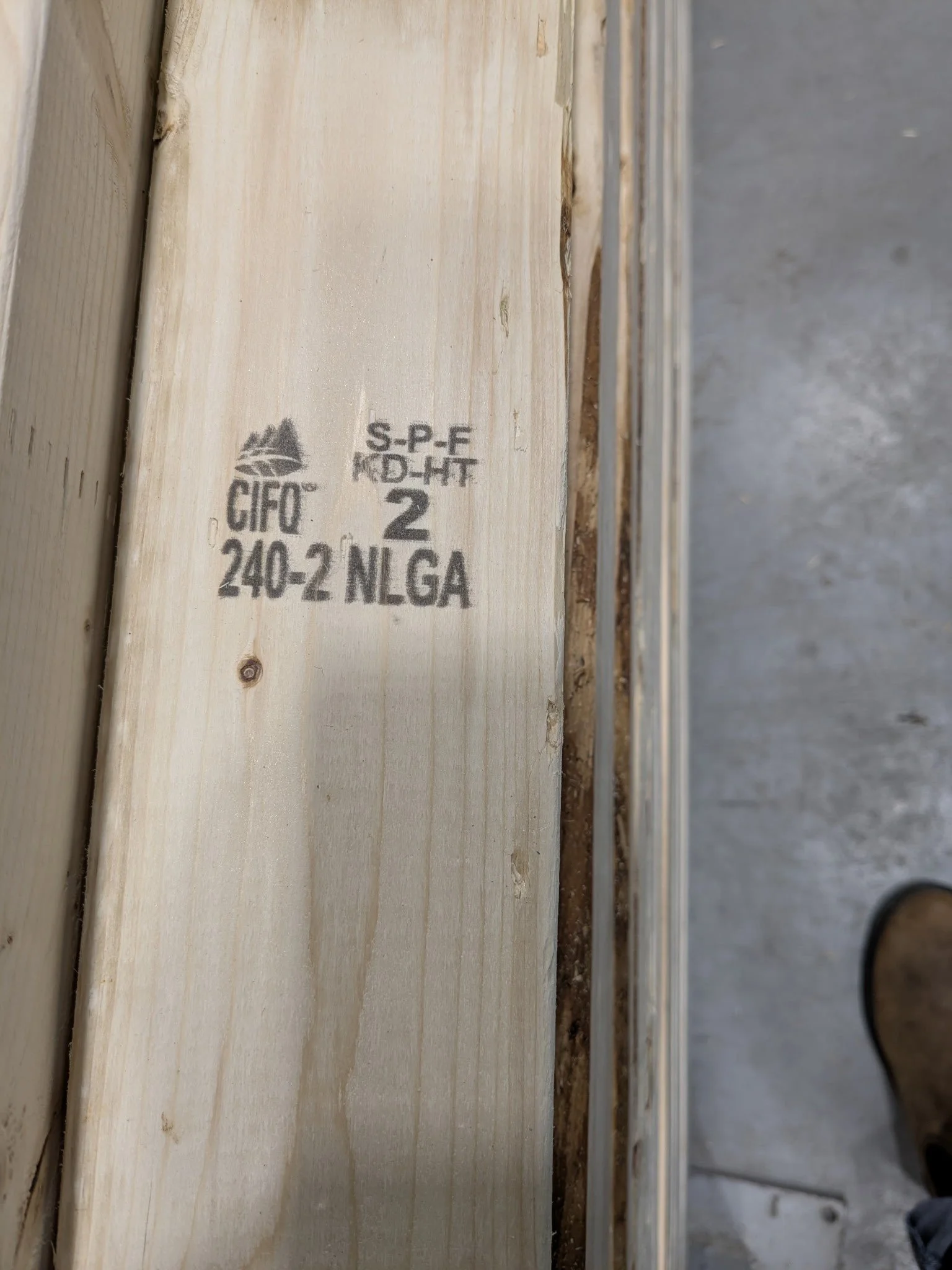
Locally owned retail lumber stores typically have shorter supply chains (many own their own forestlands and sawmills), and the chances are much higher that the wood is from the region. It is also easier to request that they source local wood products. You can also buy directly from local sawmills, which usually buy logs harvested within a short radius of the mill.
Or, if you’re buying from major retailers, knowing how to read a lumber stamp will help you be sure of what you’re getting— and from where.
Wood has many attributes that make it a strong choice for green home construction and renovation. But, as like any building material, knowing how and where it was produced helps to understand its total environmental and economic impact. When we buy local wood, we reward landowners for keeping forests as forests, support the local economy, and store carbon both on the ground and in long-lasting wood products.
This article appeared in the Spring 2026 edition of Green & Healthy Maine HOMES. Subscribe today!
Find Maine experts that specialize in healthy, efficient homes in the Green Homes Business Directory.