
Steppingstones to future employment

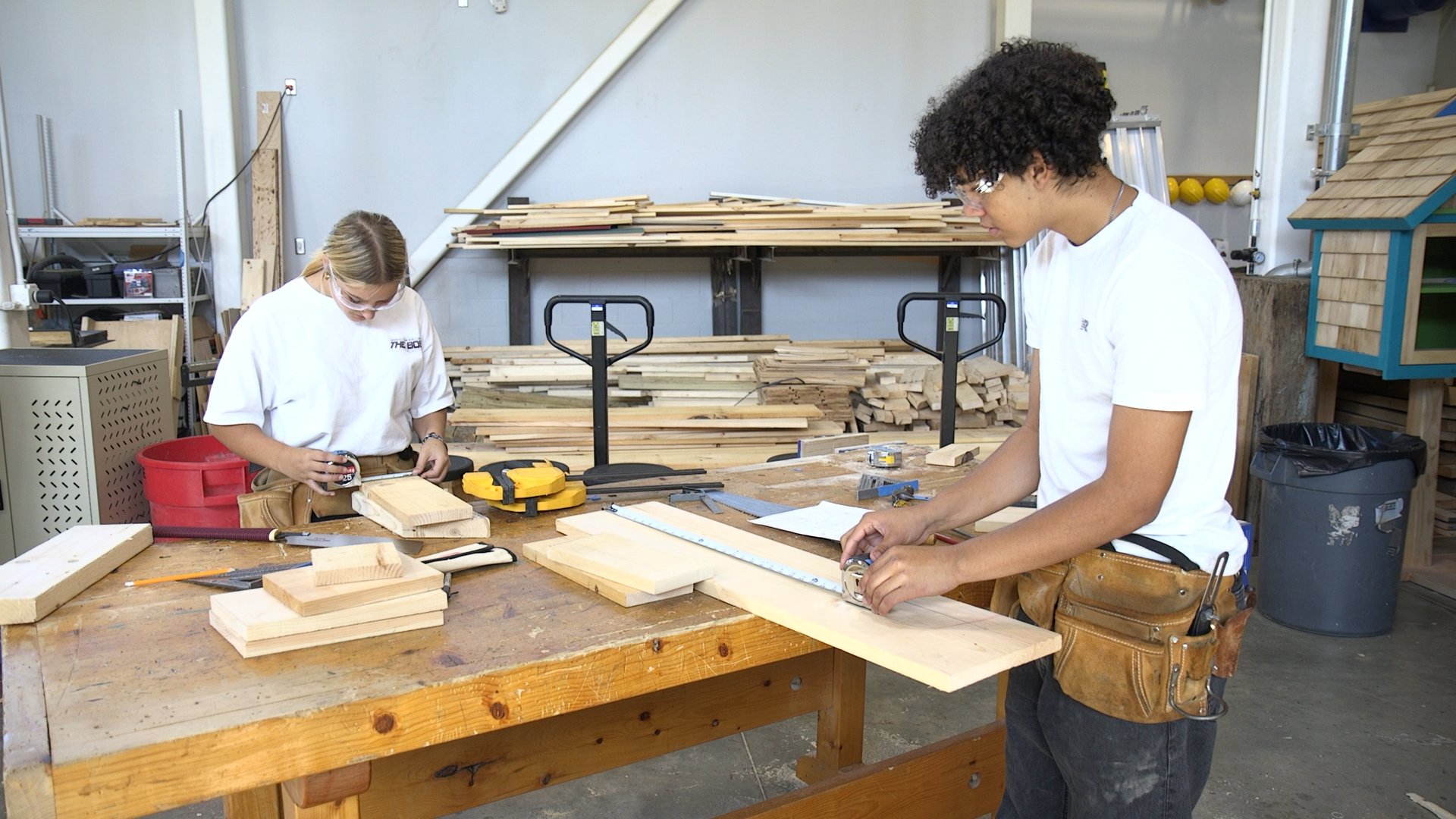
Students at the Midcoast School of Technology Carpentry pre-apprentice and apprenticeship programs (here and at the top of the next page), learn key skills to help them succeed in the construction trades, including basic shop safety, proper tool use, framing, and installing windows, doors and trim.
Training high-performance builders with pre-apprenticeships
By Justin R. Wolf
Photos by Matt Beach, Cre8iv Co.; courtesy of Educate Maine
THE MAINE APPRENTICESHIP PROGRAM (MAP), which operates under the authority of the state’s Department of Labor, has been in place for over 85 years. MAP provides employers with the tools to set up their own apprenticeship programs. The training model, known as “earn and learn,” introduces emerging professionals (16 is the minimum age to join) to skilled trades that are in high demand and gives participants a clear path to transition from the classroom to the job site.
An impressive 90% of apprentices who complete their program are still working with their employer after one year. Consequently, MAP has been a critical program for supporting workforce development across the state for nearly a century, focused on entry-level jobs in fields such as construction, farming, healthcare and IT. According to Maine’s Center for Workforce Research and Information (CWRI), the most in demand high-wage roles in the residential construction space are carpenters and electricians, with painters, construction managers and plumbers all not far behind. And yet, the combined openings for these jobs now exceed 1,500. To help close the labor gap, several organizations have established pre-apprenticeship programs that can serve as a critical steppingstone for individuals to attain basic skills, gain industry connections, and enhance their employability en route to formal apprenticeships.
Ahead of the curve
In 2023, Maine took the bold step of codifying a set of standards for certified pre-apprenticeship programs in the state statute. This establishes guidelines for hands-on training and promotes partnerships between educational institutions and employers.
Hannah Greene, manager for workforce partnerships with the nonprofit Educate Maine, highlights the fact that not even the U.S. Department of Labor has written uniform standards for such programs. “Maine is ahead of the curve in defining what high-quality pre-apprenticeships look like and ensuring they’re meeting standards, just like registered apprenticeship programs.”
Educate Maine, based in Portland, is one of a handful of what Greene calls “intermediary sponsors” of registered apprenticeship and pre-apprenticeship programs in the state. “We are a bridge between the Maine Department of Labor and MAP, and for employers or training providers that are interested in developing and running their own programs,” she says.
Other notable intermediaries include Associated General Contractors (AGC) of Maine and the state chapter of the AFL-CIO labor union. These organizations provide technical assistance, administrative support, and logistical planning for recruitment and staffing. One thing they don’t do is presume to tell employers what they need.
“It’s always the employers identifying what they need,” Greene says. “That typically starts with program development for entrylevel roles. Then once an employer has their first program up and running, they recruit pre-apprentices, find mentors to train them, and get a handle on the process.”
Training high-performance builders
One notable pre-apprenticeship for which Educate Maine serves as intermediary sponsor is passivhausMaine’s (phME) High Performance Building Systems & Practices program. Now in its second year, phME’s pre-apprenticeship accepts 12 to 16 participants for each cohort, spanning a range of ages and experience levels. Some trainees are completing high school; others are in their 30s or 40s and looking to switch careers. “You don’t have to quit your job to participate,” says Naomi Beal, phME’s executive director. “It’s meant to work around people’s existing professional or school lives as an add-on, as a way to explore the construction trades.”
The organization’s pre-apprenticeship comprises eight monthly sessions, from April to November, which can be attended virtually or in person at phME’s Freeport headquarters. Complementing each two-hour class are separate monthly job shadowing opportunities with select phME partner firms where pre-apprentices get hands-on experience at active Passive House job sites. A modest stipend is available to students as well.
The phME program is designed to be a general-interest gateway, covering everything from building materials and construction best practices to air barriers and mechanical, electrical and plumbing systems. Once participants complete the program and become MAP-certified pre-apprentices, they can pursue a formal apprenticeship in a specific trade.
The phME program also aims to diversify the workforce by encouraging people who have traditionally been underrepresented in the home trades, particularly women. “Our program provides opportunities that maybe weren’t available when they were younger,” Beale says.
Further broadening the appeal of such programs, the AGC of Maine partners with Maine’s community college system, in conjunction with the Harold Alfond Center for the Advancement of Maine’s Workforce, which coordinates short-term training programs for people of all ages, as well as local high schools and technical education centers for younger applicants.
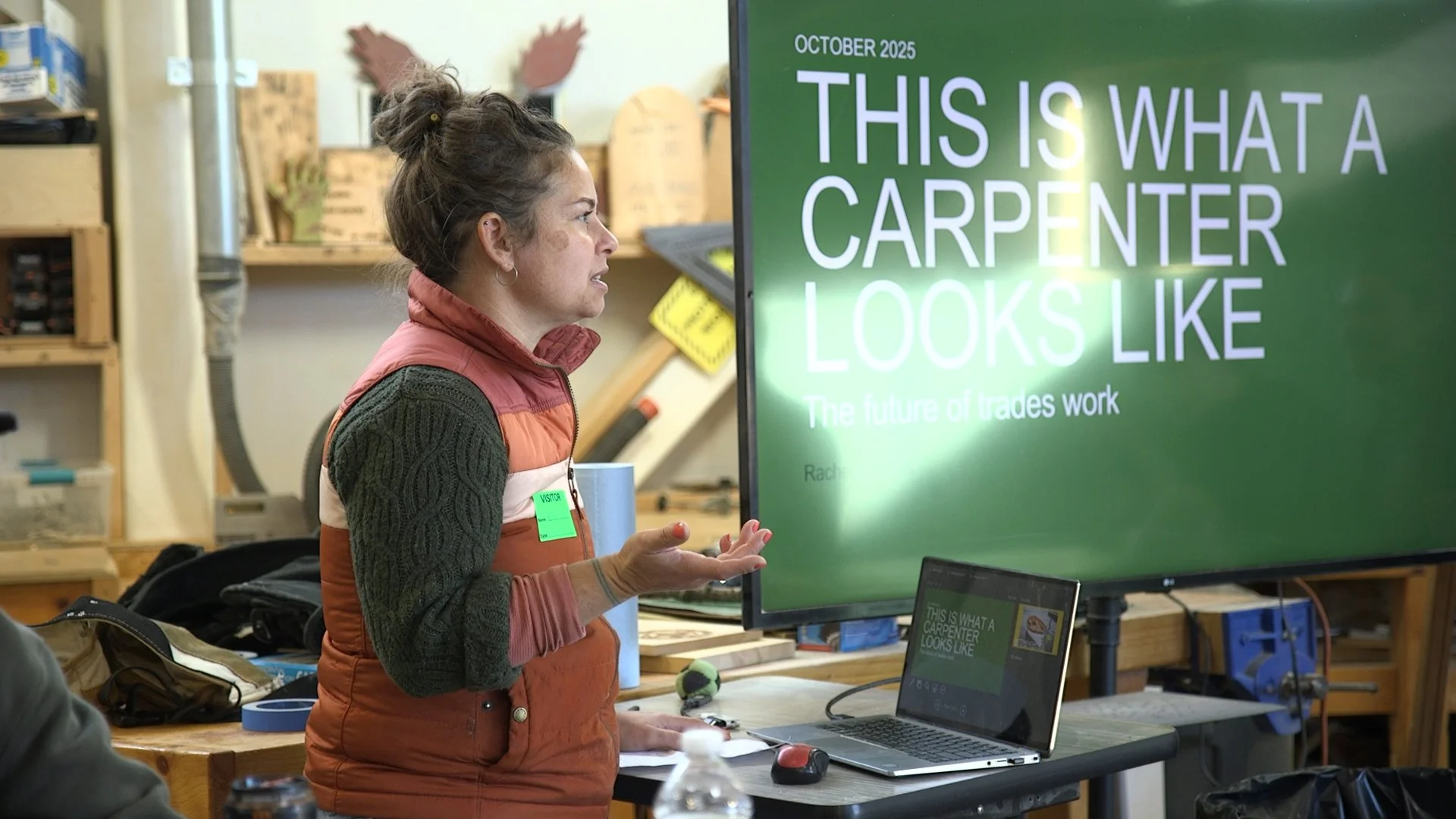
Julian Stearns, an instructor in the Midcoast School of Technology Carpentry pre-apprentice program teaching an introduction class.
Why pre-apprenticeships are important
Maine is a growing state, but geographically speaking, that growth isn’t being distributed equally. Employers in the interior and northern parts of the state have a harder time finding qualified candidates for construction jobs. Intermediary organizations like Educate Maine are mission critical for bridging that divide because they have the tools to facilitate new partnerships and educate employers on next steps.
Another shortcoming is that Maine does not require contractors to be licensed or earn continuing education credits. Meanwhile, the state has comparatively stringent building and energy codes, making the licensing and educational loophole that much more concerning. Pre-apprenticeship and apprenticeship programs in the construction and home trades can help bridge that gap.
As Maine’s population and workforce grows, so too will the need for skilled tradespeople in every corner of the state. “We need them to build more infrastructure,” Greene says, “to build more residential houses and to maintain roads, to allow people to feel like they’re able to relocate for opportunities that are good for them long term.”

This article appeared in the Fall 2026 edition of Green & Healthy Maine HOMES. Subscribe today!
Find Maine experts that specialize in healthy, efficient homes in the Green Homes Business Directory.