
Out with the old, in with the new: fall gardening guide
By June Donenfeld
As the days grow ever shorter and the nights longer, it’s time to harvest those last valiant tomatoes, enjoy your late-blooming flowers and get ready to tackle some fall gardening tasks before winter arrives. There are leaves to be raked (maybe), vegetable stalks and roots to consign to the compost, and notes to be jotted down about what worked (or didn’t) over the spring and summer. But it’s also time to think about planting for next spring. In autumn, there is less stress on plants, less need for watering, and less competition for moisture, nutrients and space in the garden.
Cut it out…or not

❏ After harvest, add your (healthy) vegetable remains to your compost, cutting the larger parts into small pieces.
❏ Cut out and safely dispose of diseased or infested plant parts. Do not add them to a standard backyard compost pile or leave them on top of the soil: The plant viruses, fungal spores or bacterial pathogens can reinfect your garden the following year. Instead, dispose of them by:
• Burning - which completely destroys the pathogens in heavily diseased or infested stalks or vines (check local town burn permits and rules)
OR
• Taking large diseased woody debris or garden stalks to your local transfer station if they accept yard waste for special disposal or industrial composting
❏ Dig up and dispose of invasive non-native plants, which will need special methods (see Resources, below).
Leave perennials with tall, sturdy stems:
Beneficial insects use the hollow stalks to build winter nests, and birds make fine meals from the dead seed heads. Some do benefit from cutting back but wait until after a few hard frosts.
❏ Fall is usually the best time to divide spring and summer bloomers, after they have finished flowering. Divide and replant 4 to 6 weeks before the ground freezes on a cool, cloudy day to reduce shock; keep newly separated plants well-watered until the ground freezes. (Divide fall-blooming perennials in the spring.)
❏ Dig, cure and store tender perennials, such as dahlias. (“Cure” means to dry out harvested roots, tubers, or bulbs in a protected, well-ventilated place for a few days to weeks after digging them up, which heals cuts, toughens the outer skin, and prevents rot during winter.) Pro tip: When cold temperatures kill the top growth on your dahlias, wait to dig them up for two weeks; this time in the ground after frost yields better storage results.
❏ Collect seeds from annual flowers for planting next year. (If they’re hybrids, the seeds may not produce identical blooms but consider them fun horticultural mysteries.) Store these seeds, along with any leftover seed packets, in a cool, dry location. Exception: Onion-family seeds—after year one, the likelihood they will germinate decreases greatly.
TO RAKE OR NOT TO RAKE, THAT IS THE QUESTION
THE PROS:
❏ In general, try to “leave the leaves” to give pollinators and other invertebrates the winter protection they need to complete their life cycle.
❏ Spiders, snails, worms and beetles live among the fallen leaves and nourish chipmunks, turtles, birds and amphibians.
❏ Fallen leaves suppress weeds and help with moisture retention, just like store-bought mulch.
THE CONS:
❏ Homeowner associations may have rules for leaf litter.
❏ Thick leaf layers can smother the grass.
❏ Fallen leaves from trees with fungal disease carry spores that can reinfect plants.
❏ Deer ticks need cooler, high-humidity habitat, so they seek out areas that are shaded, moist and covered with leaf litter and debris.
THE BOTTOM LINE:
❏ If ticks are an ongoing issue and your top priority, completely removing leaves may be the best option.
❏ Otherwise, to decrease the chance of tick encounters, remove leaves from high-traffic areas but leave them in perennial beds and under trees and shrubs.
❏ Corral them into piles to decompose or create a small, fenced area to contain them.
❏ Run over them with a lawnmower and …
• add them to your compost pile
OR
• leave them in place to speed their breakdown. This reduces tick- and pollinator-friendly habitat but still builds up your soil’s organic matter.
AMEND AND PROTECT YOUR SOIL AND PLANTS
❏ Send a soil sample to Maine’s soil testing service to see if it needs amending (see Resources, below).
❏ Protect soil by mulching or planting a winter cover crop.
❏ To overwinter potted perennials, before a hard freeze, “heel in” (temporarily plant) the pots to protect the roots from damaging freeze/thaw cycles. Dig a trench away from foot traffic and vehicles, set them in in a line, and pile up the soil to the edge of the pot. Add mulch, but wait till after a hard freeze, after rodents have found other places to make their winter nests.
❏ Use stakes to mark key landscape features, like garden beds and shrubs, that could be damaged during snow removal.
❏ Add a light layer of leaves or natural mulch around young plants to keep roots safe from extreme freeze-thaw shifts.
❏ Keep trees and shrubs well hydrated through hard frost, when they go dormant. Evergreens (needled and broadleaf types, like rhododendron) are vulnerable to winter burn (a type of dehydration injury) if they don’t get enough water before winter sets in.
tOOL CARE
❏ Shut off external water sources; drain and coil hoses; store horizontally to avoid cracking.
❏ Remove soil and debris from all tools, and oil metal items thoroughly to prevent rust.
❏ If you’ve used tools on diseased plants, first clean them of soil, sap, and plant debris, then wipe or spray the blade with isopropyl alcohol to kill bacteria and pathogens. Allow tool to air dry completely.
❏ Sand and refinish worn garden handles and sharpen metal blades.
Fall is a great time to plant...
NATIVES
To sustain local insects, birds and pollinators, follow the 70/30 rule of ecological gardening: Of the total biomass (not individual number) of plants, have at least 70% natives; the rest can be non-native, as long as they don’t crowd out the natives.
Avoid known invasive plants; check the Resources on the next page to identify them.
Growing native plants from wild-collected seeds promotes genetic diversity, making plants much more resilient to climate shifts and weather extremes.
Many native seeds need a winter period of cold moist temperatures to break dormancy and germinate, but you can sow virtually any Maine native seed outdoors in fall or winter.
SEEDLINGS
Plant four to six weeks before a hard frost, to allow root systems to anchor into the ground, minimizing the risk of heaving during the freeze/thaw cycle.
Watch the forecast and try to plant before predicted rainfall.
If you can, wait until late October or early November when the temperatures are much cooler.
Once planted, protect area around seedlings with 2–4 inches of leaves or aged, undyed bark mulch; keep watering plants, keeping the soil moist but not soggy, until they go dormant, which you’ll recognize
when they lose their leaves or turn brown and die back.
FLOWER BULBS
Wait until the soil has cooled, which is typically mid- to late October for northern Maine gardens and early to mid-November in southern Maine.
Bulbs grow poorly or rot in poorly drained soil. Avoid low-lying areas or areas that catch rain and snowmelt off the roof.
Plant deep enough so they won’t heave out in winter, but not so deep that they remain in wet sub-soil and rot over the winter.
Plant 4–5 large bulbs every square foot at 8–10 inches deep, and 9–12 small ones every square foot at 5 inches deep. This is a rule of thumb—follow instructions for the bulbs you select.
Cover with soil, add 2–3 inches mulch and water well.
TREES AND SHRUBS
Plant new trees and shrubs before the ground freezes, when air is cool and earth is warm.
Irrigate deeply once or twice a week, watering directly at the root zone of the plant.
Fence in individual trees and shrubs with wire mesh/hardware cloth to protect them from deer, rabbits and other creatures.
PERENNIAL, BIENNIAL & ANNUAL SEEDS
You can directly sow many cold-tolerant flower seeds in your garden in the fall, which can be easier than in the spring. Benefits include cooler temperatures, less watering because of increased (continued) rainfall, stronger roots and early spring growth, depending on the variety.
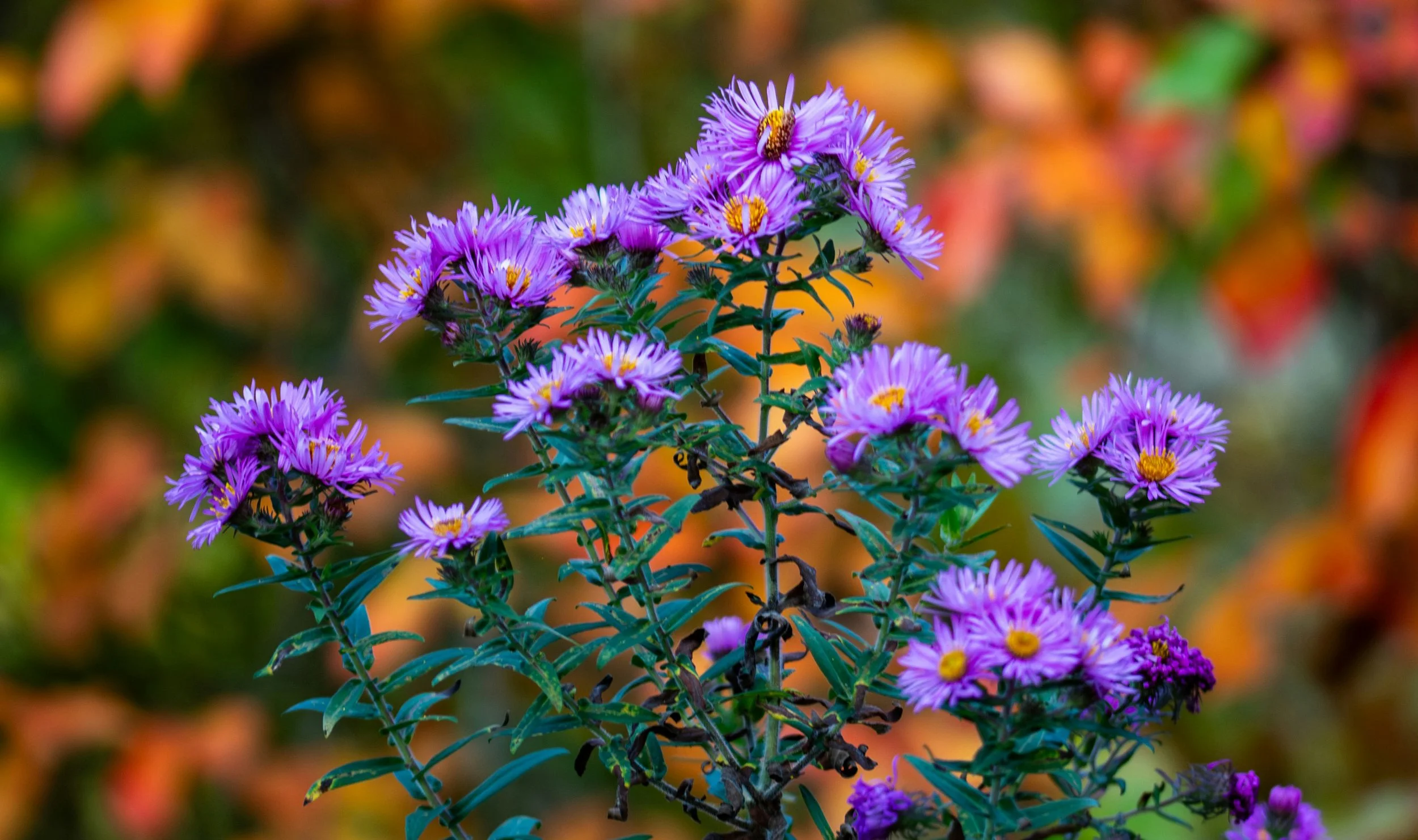
Cold-tolerant perennials include New England asters, black-eyed susans, coneflowers, bee balm and Sundial lupine (Lupinus perennis, not to be confused with the large, invasive lupine often seen in Maine). For biennials, look for hollyhocks, sweet William, and tall (aka American) bellflower. Cold-tolerant annuals include larkspur, bachelor’s buttons and love-in-a-mist.
Plant seeds after several hard frosts and they will lie dormant all winter.
Avoid ornamental cultivars with double-petaled flowers, such as certain daffodils, peonies, or tulips; they often hide or eliminate the pollen and nectar resources bees and butterflies need.
Fall AND WINTER SOWING NATIVE SEEDS IN POTS
❏ Use sturdy clay or heavy plastic pots that won’t break in the ice and snow. Thick, high-density polyethylene (HDPE), double-walled resin and fiber-resin composite pots all work.
❏ Fill with organic potting mix that contains compost and press down firmly.
❏ Scatter native seeds on top. Leave tiny seeds uncovered on the surface and cover larger seeds with a thin layer of coarse sand or soil.
❏ Write the plant name on a tag in pencil (ink will fade outside).
❏ Cover the top of the pots with fine wire mesh or hardware cloth so mice and birds don’t eat the seeds. (See Wild Seed Project link in Resources for details.)
❏ Set pots outdoors November through February, when rain, snow and cold air can trigger their natural growth cycle.
RESOURCES
Native Plant Finders:
Invasive Plant Finders:
Invasive Plant Disposal: extension.unh.edu/resource/methodsdisposing-non-native-invasive-plants
Seeds:
Live Plants:
Some nurseries carry native plants exclusively; others have mix of native and non-native.
5 Star Orchard (Brooklin)
Bas Rouge Farm (Orono)
Edgewood Nursery (Falmouth)
Fedco (Clinton)
Fernwood Nursery (Montville)
Fieldstone Gardens (Vassalboro)
Figwort Farm (South Bristol)
Honey Petal Plants (Brooks)
Maine Audubon (Falmouth & Holden)
Marpa Farm & Nursery (Richmond)
Native Gardens of Blue Hill (Blue Hill)
Native Haunts (Alfred)
Radical Roots Nursery (Winterport)
Rebel Hill Farm (Liberty)
Ripley Farm (Dover-Foxcroft)
Rooted Elements (Montville)
Sideyard Nursery (Portland)
Sweetfern Maine (Cape Neddick)
Wells Reserve at Laudholm (Wells)
Whaleback Nursery (Limington)
National Wildlife Federation (Maine-specific plants available)

This article appeared in the Fall 2026 edition of Green & Healthy Maine HOMES. Subscribe today!
Find Maine experts that specialize in healthy, efficient homes in the Green Homes Business Directory.